Fire protection FAQ for Calgary businessesStraight answers, before the inspector asks.
How often each fire protection system needs service in Calgary, who is allowed to do it, what it costs, and what the National Fire Code – 2023 Alberta Edition requires. Kitchen hood suppression every 6 months; extinguishers, fire alarms, sprinklers and backflow once a year.
Kitchen fire suppression systems in Calgary
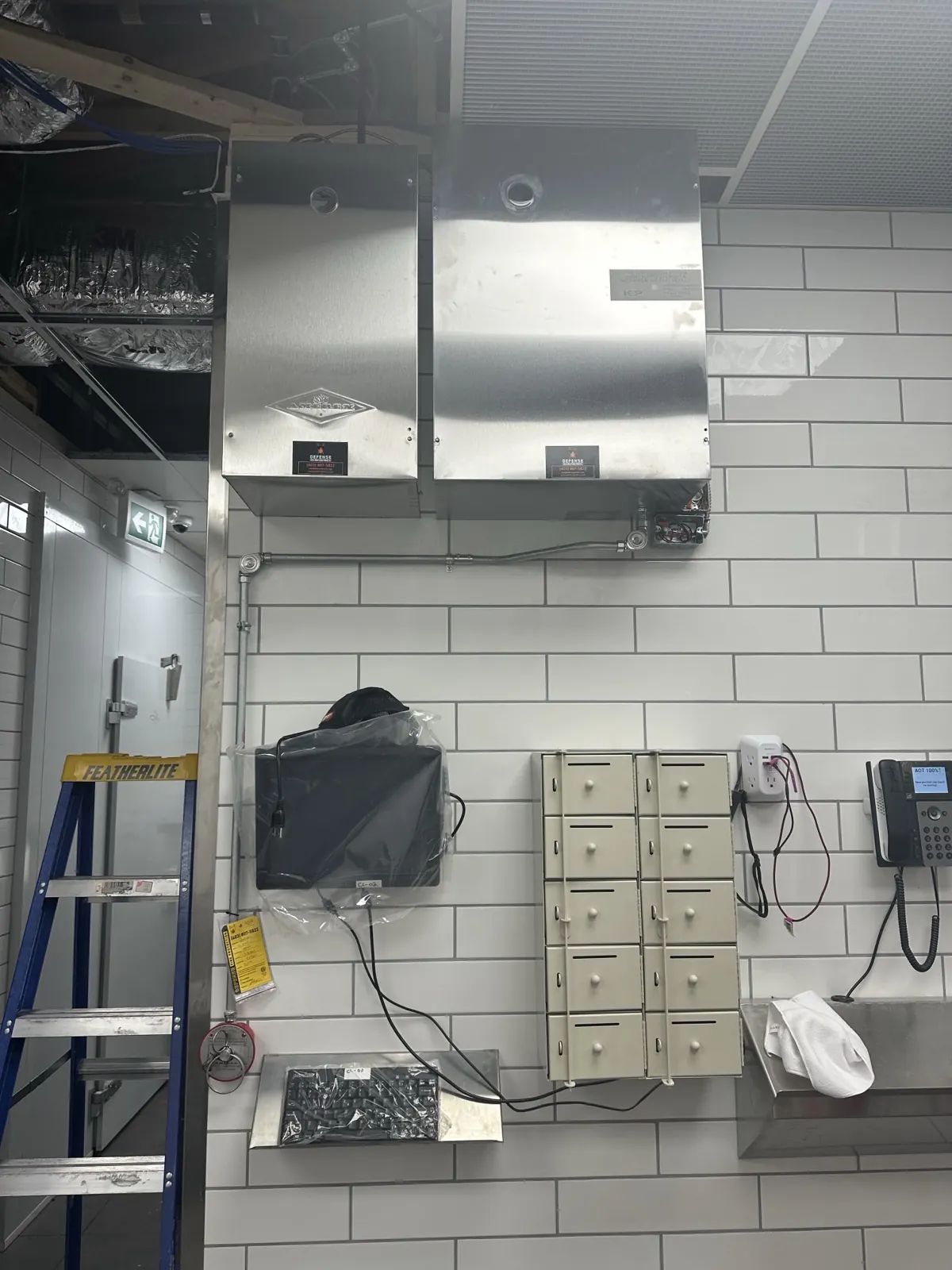
Commercial kitchen hood suppression must be inspected every 6 months by a technician certified on that brand. Full service details are on our kitchen hood suppression page.
How often does a kitchen fire suppression system need to be inspected in Calgary?
Every 6 months. Alberta requires fixed kitchen fire suppression systems to be inspected and maintained semi-annually by a qualified person, under the National Fire Code – 2023 Alberta Edition, NFPA 96 and NFPA 17A. This is separate from how often your exhaust hood is cleaned. Book a kitchen hood inspection.
Who is allowed to service my kitchen fire suppression system in Alberta?
Only a technician certified by the system's manufacturer on that specific system, or one holding the approved SAIT certificate for pre-engineered kitchen systems. Training on one brand does not qualify a technician to work on another, so a Badger-trained tech should not service an Amerex or Kidde system unless they hold that certification too. Defense Fire Protection is an authorized distributor for Kidde, Badger, Amerex, Buckeye and ProTex II, and we service CaptiveAire. See the brands we service.
Which cooking appliances need a fire suppression system?
Any commercial appliance that produces grease-laden vapours. In Alberta that includes:
- fryers and pressure fryers
- ranges used to sauté or fry, including residential ranges in a commercial kitchen
- griddles, open and closed chain broilers, and char broilers (gas, electric, lava rock, charcoal, mesquite or wood)
- woks, tilting skillets and braising pans
- induction cookers used to sauté or fry, and horizontal rotisseries without doors
Not sure about your line? Send us your appliance list.
Which kitchen appliances don't need fire suppression?
Low-grease and enclosed appliances usually don't: steamers, rice cookers, soup kettles, proofers, ovens (including pizza decks and cook-and-hold ovens), rotisseries with doors, and ventless fryers. They may still need an approved ventilation system, and the Calgary Fire Department makes the final call.
Do donair, gyro and shawarma cookers need fire suppression in Alberta?
Usually, yes. Shawarma cookers need fixed fire suppression whether new or existing, and so do new donair or gyro cookers in new restaurants. An existing kitchen with two or fewer vertical rotisseries that only reheat pre-cooked donair or gyro meat is the exception. Add a third, and all of them need protection. More in our donair and shawarma cooker article.
What parts make up a kitchen fire suppression system?
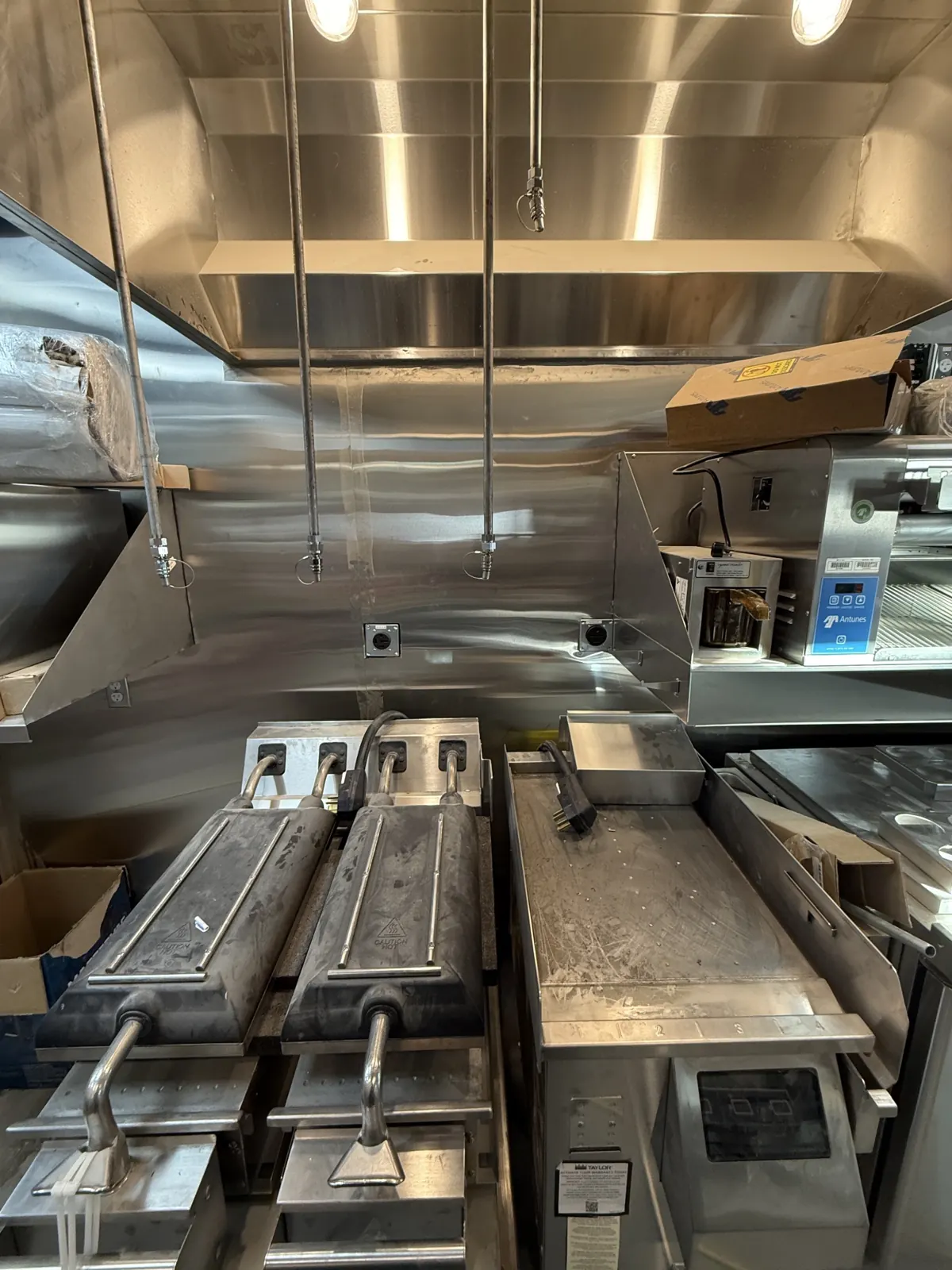
An agent cylinder, a control head, a detection line with fusible links, a manual pull station, a gas shut-off valve, and piping with nozzles. In full:
- the agent cylinder and valve assembly with its pressure gauge
- the control head, also called the releasing device, with its system valve actuator and micro switch
- the detection line with fusible links or thermo-bulb links
- the remote manual pull station
- the mechanical or electric gas shut-off valve
- distribution piping, and nozzles with strainers and nozzle caps
Some systems, like Amerex KP, also use an expellant gas cartridge. See the parts guide below.
What happens during a semi-annual kitchen suppression inspection?
The technician checks coverage, replaces fusible links, tests every shut-off and reseals and tags the system. Specifically, the technician:
- checks nozzle coverage against your current appliances
- replaces fusible links, and cleans and re-caps the nozzles
- checks the cylinder pressure gauge, or the cartridge weight on cartridge-operated systems
- trips the control head to test the gas shut-off valve, micro switch and fire alarm tie-in
- tests the manual pull station
- reseals the system and attaches a new service tag
Most restaurants take about two hours. Book yours.
Can I mix parts from different suppression system brands?
No. Each kitchen suppression system is tested and listed as a complete unit from one manufacturer, and Alberta requires listed equipment to be maintained according to its listing. We have found a Kidde agent cylinder connected to a Badger control head in a Calgary kitchen. That system could not be certified and may not have discharged in a fire. Read why brands can't be mixed.
My suppression system is old. Do I have to replace it?
Yes, if it doesn't meet UL 300 or ULC/ORD-C1254.6. In Alberta, kitchen suppression systems must meet one of those standards, so older dry-chemical systems that meet neither need replacement. Used systems that aren't certified to these standards can't be reinstalled. We confirm your system's listing on the first visit, and you can get a price range for a replacement.
Can I move or add a fryer under my hood?
You can move appliances under the same hood if a qualified technician moves the nozzles, but adding appliances means redesigning the system. Moving is fine as long as you aren't adding appliances or new types of appliance. Wheeled fryers must go back to their designed spot after cleaning, because the nozzle aimed at that spot is what protects them. More in moving appliances under the hood.
Does my kitchen suppression system have to be tied into the building fire alarm?
Yes, if the building has a fire alarm system. Alberta has required this since the 1997 Alberta Building Code: when the suppression system discharges, the building fire alarm must activate. The control head's micro switch provides that signal, and we test it at every inspection. See fire alarm inspection.
Does a sprinkler head or CO2 system under the hood count as fire suppression?
No. Sprinkler systems and CO2 systems that haven't been tested to ULC/ORD-C1254.6 do not meet the Alberta code requirement for fixed fire suppression under a commercial cooking hood. Water-wash hoods with a fire cycle still need a separate suppression system too.
How does wet chemical fire suppression agent work?
It reacts with hot cooking oil to form a soapy foam layer that smothers the fire. Wet chemical agents, like Badger's Karbaloy (a potassium salt solution), cause this reaction, called saponification. The foam keeps the fire from re-flashing while the oil cools. Compare agents on our brands page.
What should I do if my kitchen suppression system discharges?
Get everyone out and call 911 if there is a fire, then call us at (403) 807-5822 once the fire department clears the scene. The system must be cleaned, the agent cylinder recharged, the fusible links replaced and the control head reset by a certified technician before you can cook again. See what to do after a discharge, including safe clean-up.
Is hood cleaning part of the fire suppression inspection?
No. Hood and duct cleaning must be done by a cleaner trained through an Alberta-approved program: Phil Ackland or MFS. Clean at least once a year, and every 3 months for deep-fat frying or char-broiling. Book your suppression inspection right after cleaning so nozzles and links start clean.
How long do I have to keep fire suppression inspection records?
At least five years, kept on site where the fire department can see them. Alberta requires at least the current and previous inspection reports to be available, and no record can be destroyed within five years of being prepared.
Kitchen fire suppression parts we inspect, repair and replace
The parts on Kidde, Badger Range Guard, Amerex KP, Buckeye Kitchen Mister, ProTex II and CaptiveAire systems.
- Agent cylinder & valve
- Steel cylinder holding the wet chemical agent. Stored-pressure cylinders have a pressure gauge and gauge shield.
- Wet chemical agent
- Potassium-salt solution, such as Badger Karbaloy, that saponifies hot grease. Recharged after any discharge.
- Control head
- The releasing device that fires the system automatically or manually. It works the system valve actuator on each cylinder and is sealed with a tamper seal.
- Expellant gas cartridge
- On cartridge-operated systems, a nitrogen or CO2 cartridge pressurizes the agent tank at discharge. Weighed or replaced at service.
- Fusible & thermo-bulb links
- Heat detectors above each appliance and in the duct that melt or burst at their rated temperature. Replaced at every semi-annual service. See fusible link ratings.
- Detection line
- Stainless cable run through conduit and pulley elbows that holds the links under tension and connects them to the control head.
- Electric thermal detectors
- On electrically actuated systems, rate-compensated thermostats (like Fenwal Detect-A-Fire) wired to a listed releasing panel replace fusible links.
- Remote pull station
- The pull handle on your kitchen's path of exit, so staff can fire the system by hand. Tested at every inspection.
- Gas shut-off valve
- Mechanical or electric (solenoid) valve that cuts gas to the cooking line when the system fires. Electric appliances get a shunt trip.
- Micro switch
- Switch in the control head that signals the building fire alarm panel and shuts down equipment on discharge.
- Nozzles & caps
- Appliance, plenum and duct nozzles aimed per the manufacturer's design manual. Caps or foil seals keep grease out until discharge.
- Distribution piping
- Schedule 40 black steel pipe or stainless tubing. Galvanized pipe and fittings are not allowed.
- K-class extinguisher
- Required within 9.1 m of the cooking line, with a placard telling staff to pull the suppression system first.
- Service tag
- Dated tag showing the last inspection, the technician and the service company. The fire department checks it first.
Fire extinguisher questions
Extinguishers get a monthly staff check and an annual service by a certified technician. See our fire extinguisher service page for pricing and the showroom.
How often do fire extinguishers need to be inspected in Alberta?
Monthly and yearly. The owner, a designated employee or a service company does a quick monthly inspection: the extinguisher is in place, charged, the seal is intact and there's no damage. A Certified Fire Extinguisher Technician does maintenance at least once a year and updates the tag. Book annual extinguisher service.
What fire extinguisher does a commercial kitchen need?
A K-class (wet chemical) extinguisher within 9.1 m of any appliance that uses cooking oil or fat, even if you have a fixed suppression system. Post a placard beside it telling staff to activate the suppression system first. The rest of the kitchen also needs ABC dry chemical extinguishers. We stock both at our Calgary showroom.
Which fire extinguisher class do I need for my business?
Match the extinguisher class to the fire risk; most offices and shops use multi-purpose ABC units.
- Class A: wood, paper and cloth
- Class B: flammable liquids
- Class C: energized electrical equipment
- Class D: combustible metals
- Class K: cooking oils and fats
Pool chemical rooms are an exception where ABC is the wrong choice: see pool chemical room extinguishers. Visit our showroom and we'll match the size and rating to your space.
Can I use a fire extinguisher bought online or in the U.S.?
Only if it is ULC-listed for Canada. Alberta requires extinguishers to carry a ULC certification mark, a bilingual English and French label, metric measurements and the CAN/ULC standard they meet. Extinguishers with only a U.S. UL label can't be sold, used or serviced in Alberta. More in which extinguishers are legal in Alberta.
Are aerosol fire spray cans and fire extinguisher balls legal for businesses in Alberta?
No. Aerosol "point-and-spray" cans, throwable or heat-activated fire balls, and similar devices that aren't listed and labelled as complete extinguishers are not acceptable for sale or use in Alberta. They don't count toward your required extinguishers. Read why extinguisher balls aren't legal.
What are 6-year maintenance and hydrostatic testing?
Every 6 years, stored-pressure dry chemical extinguishers are emptied and examined inside; every 12 years they're hydrostatically tested, meaning the shell is pressure-tested to make sure it won't rupture. K-class, water and CO2 extinguishers are hydrostatically tested every 5 years. Any extinguisher with corrosion or damage must be tested right away. "Topping up" an extinguisher is not permitted. See hydrostatic testing.
What has to be on a fire extinguisher service tag in Alberta?
The tag must identify the extinguisher, its service history, the owner, the service company and the technician:
- the extinguisher type, size and serial number
- the last annual inspection and recharge dates
- a five-year record of monthly inspections
- the owner's name
- the service company's name, address and phone number
- the testing agency's certification number
- the technician's printed name and signature
Monthly and annual entries must be handwritten.
Does a brand-new fire extinguisher need a service tag?
Not in its first year, at most Alberta fire departments: a new extinguisher with its receipt and a monthly-check tag is accepted, as long as it was manufactured within a year of purchase. After that first year it needs annual service and a full tag from a certified company. Extinguishers bought from our showroom come ready for service.
Can my staff do the monthly fire extinguisher checks?
Yes. Monthly inspections can be done by the owner or a designated employee. Initial the tag each month. If anything looks wrong, such as a gauge in the red, a broken pin seal or damage, call a certified service company.
Fire alarm and emergency lighting questions
Fire alarms are tested yearly to CAN/ULC-S536. See fire alarm inspection and Autocall fire alarm systems.
How often does a fire alarm system need to be inspected in Calgary?
Once a year, to CAN/ULC-S536. The technician tests every device, including smoke and heat detectors, pull stations, bells and horns, the panel and batteries, and any suppression or sprinkler tie-ins. You get a report for the fire department. Book a fire alarm inspection, or read about deficiency reporting in Calgary.
How often do emergency lights and exit signs need testing?
Monthly checks by staff and a yearly test by a technician. The monthly check confirms they light; the yearly test confirms the batteries hold for the full required duration. We replace failed battery packs, heads and exit signs on the same visit, usually alongside the annual fire alarm inspection.
Sprinkler and backflow questions
Sprinklers and backflow preventers are tested once a year. We book them through our partner network and report on them, so you still deal with one company. See sprinklers & backflow.
How often do fire sprinklers need inspection?
Once a year, plus more frequent checks. Sprinkler systems need a full annual inspection and test under NFPA 25, along with periodic checks of valves, gauges and alarm devices.
How often does a backflow preventer need testing in Calgary?
Once a year, by a certified tester to CSA B64.10. Calgary's cross-connection control program requires test results to be submitted.
Fire protection service intervals in Alberta
Kitchen hood and paint booth suppression every 6 months; extinguishers, fire alarms, sprinklers and backflow every year. Here is how often each system needs inspection, maintenance or testing under the National Fire Code – 2023 Alberta Edition, NFPA standards and manufacturer manuals.
| System or part | What happens | How often | Who does it |
|---|---|---|---|
| Kitchen hood fire suppression system | Inspection and maintenance: fusible links, nozzles, cylinder, control head, gas valve, pull station | Every 6 months | Manufacturer-certified technician |
| Fusible links / detector links | Replaced with links of the correct temperature rating | Every semi-annual service | Certified technician |
| Wet chemical agent cylinder | Hydrostatic test | Every 12 years | Certified technician |
| Paint booth suppression system | Inspection and maintenance | Every 6 months | Manufacturer-certified technician |
| Kitchen exhaust hood and ducts | Check for grease build-up | At least every 7 days | Owner or staff |
| Kitchen exhaust hood and ducts | Professional cleaning | At least yearly; every 3 months for deep-fat frying or char-broiling | Certified hood cleaner |
| Portable fire extinguishers | Inspection (quick check, initial the tag) | Monthly | Owner or staff |
| Portable fire extinguishers | Maintenance and new service tag | Yearly | Certified Fire Extinguisher Technician (CFET) |
| Stored-pressure dry chemical extinguishers | Empty and internal examination | Every 6 years | Certified service agency |
| Dry chemical extinguishers | Hydrostatic test | Every 12 years | Certified service agency |
| K-class (wet chemical), water and CO2 extinguishers | Hydrostatic test | Every 5 years | Certified service agency |
| Fire alarm system | Inspection and test to CAN/ULC-S536 | Yearly | Qualified fire alarm technician |
| Emergency lighting and exit signs | Function check and annual duration test | Monthly check, yearly test | Owner check; technician test |
| Sprinkler system | Inspection and test to NFPA 25 | Yearly, plus periodic checks | Qualified sprinkler technician |
| Backflow preventer | Test to CSA B64.10 | Yearly | Certified backflow tester |
Equipment type, occupancy and the Calgary Fire Department can change these intervals. We confirm your real schedule on the first visit.
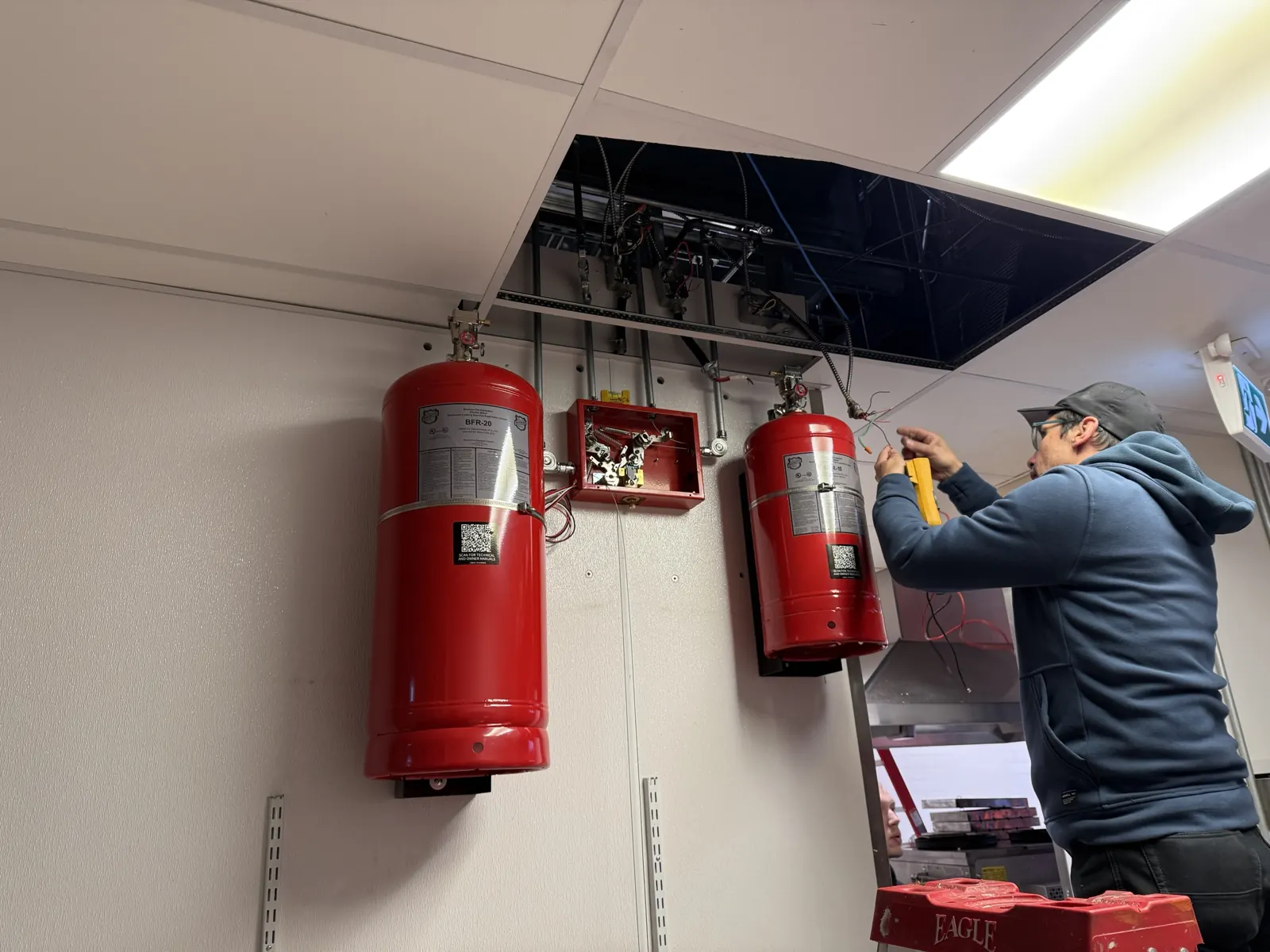
Our technicians at work
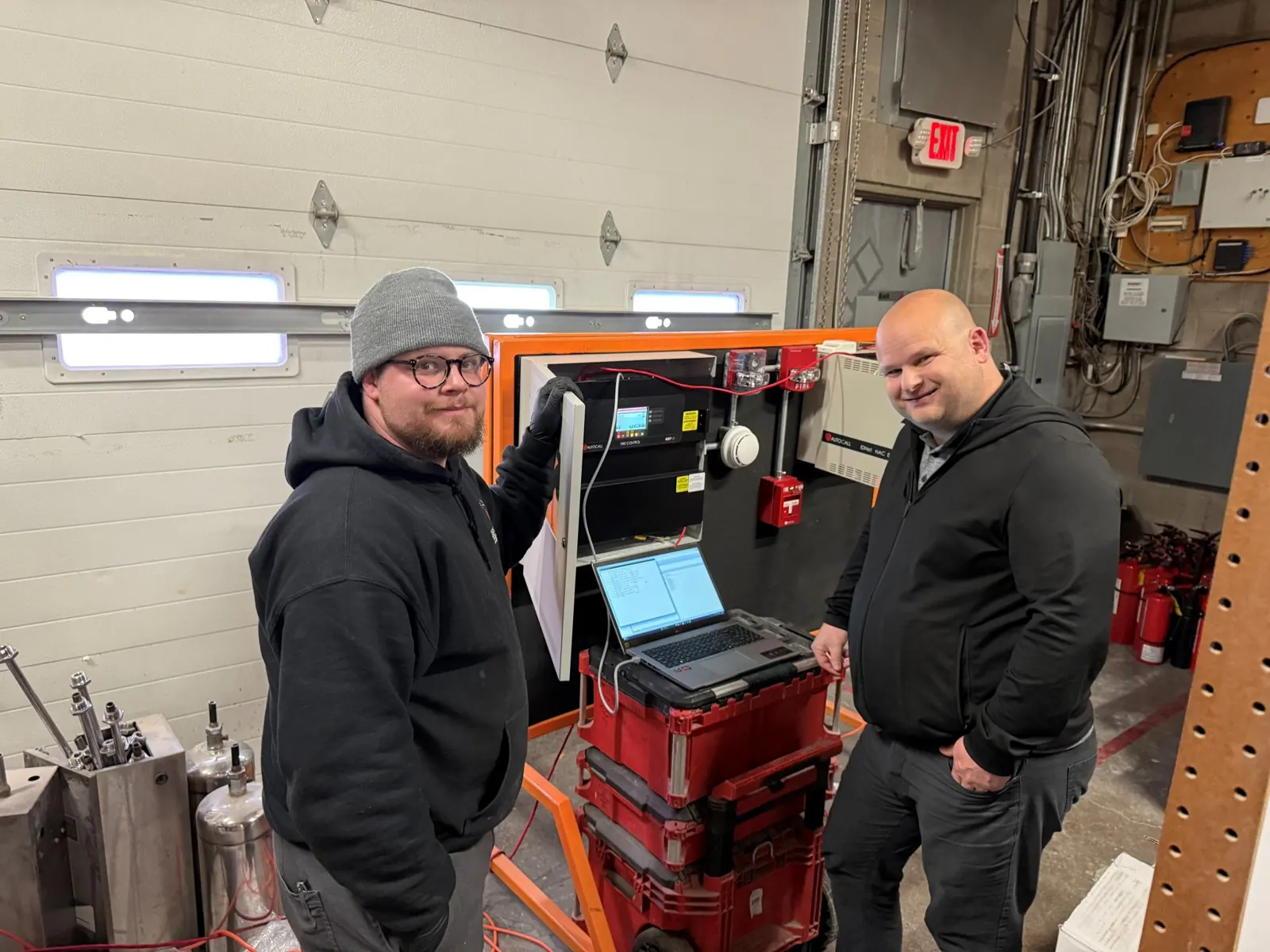
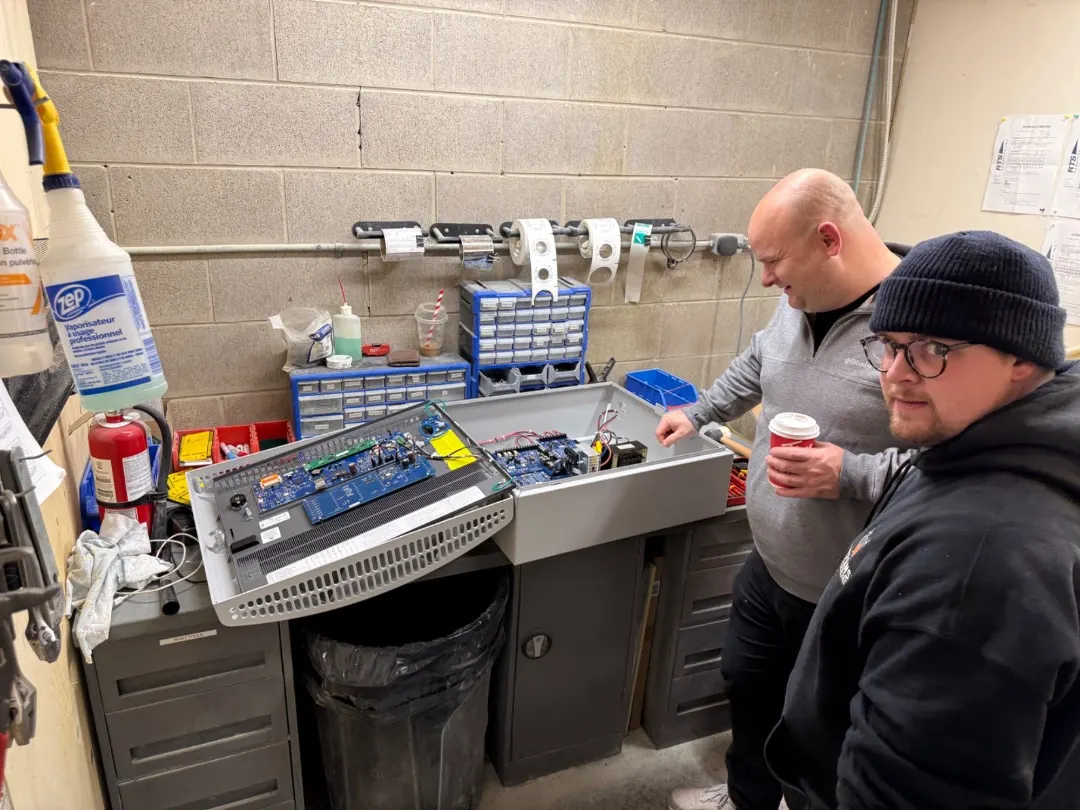
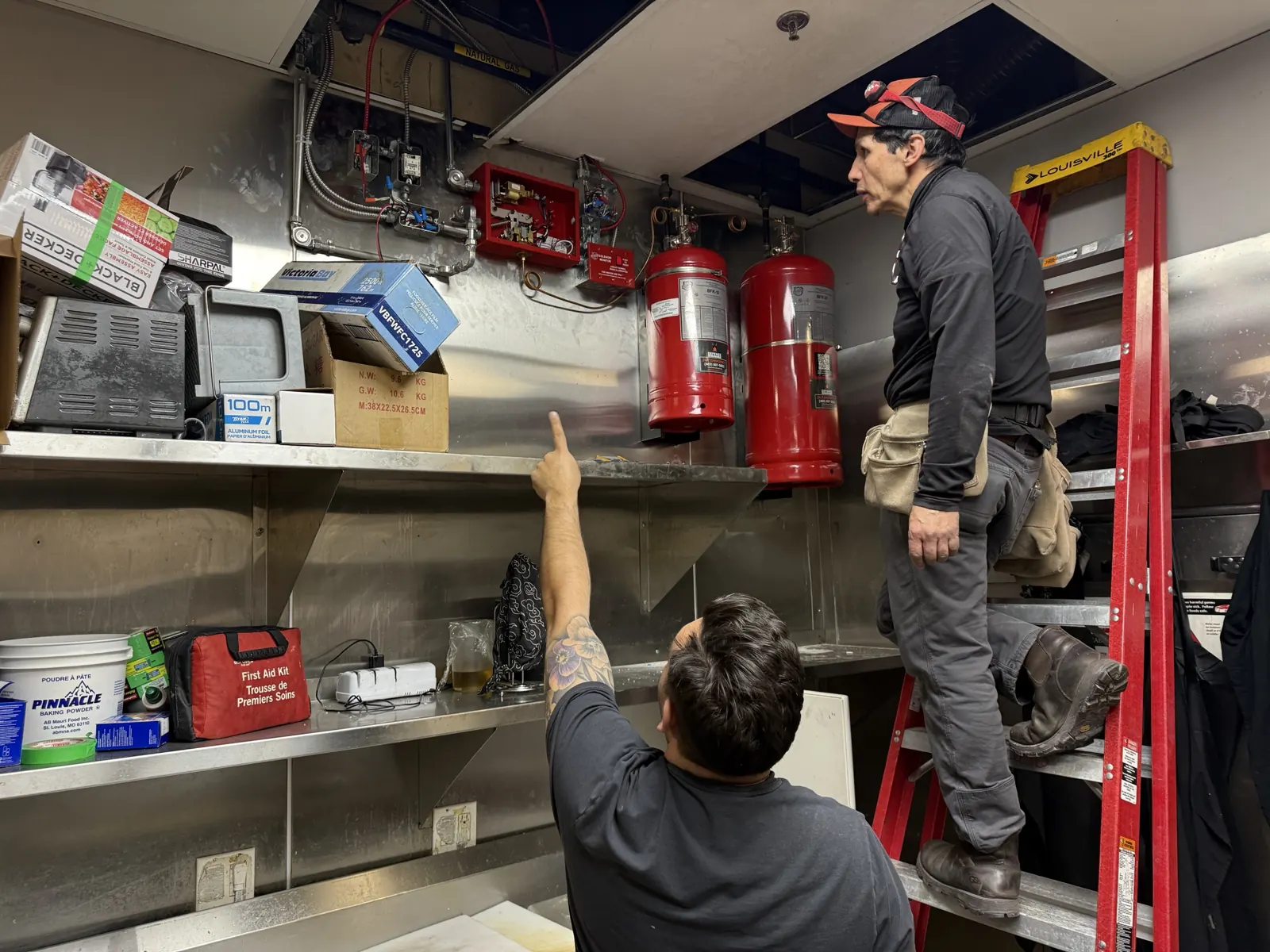
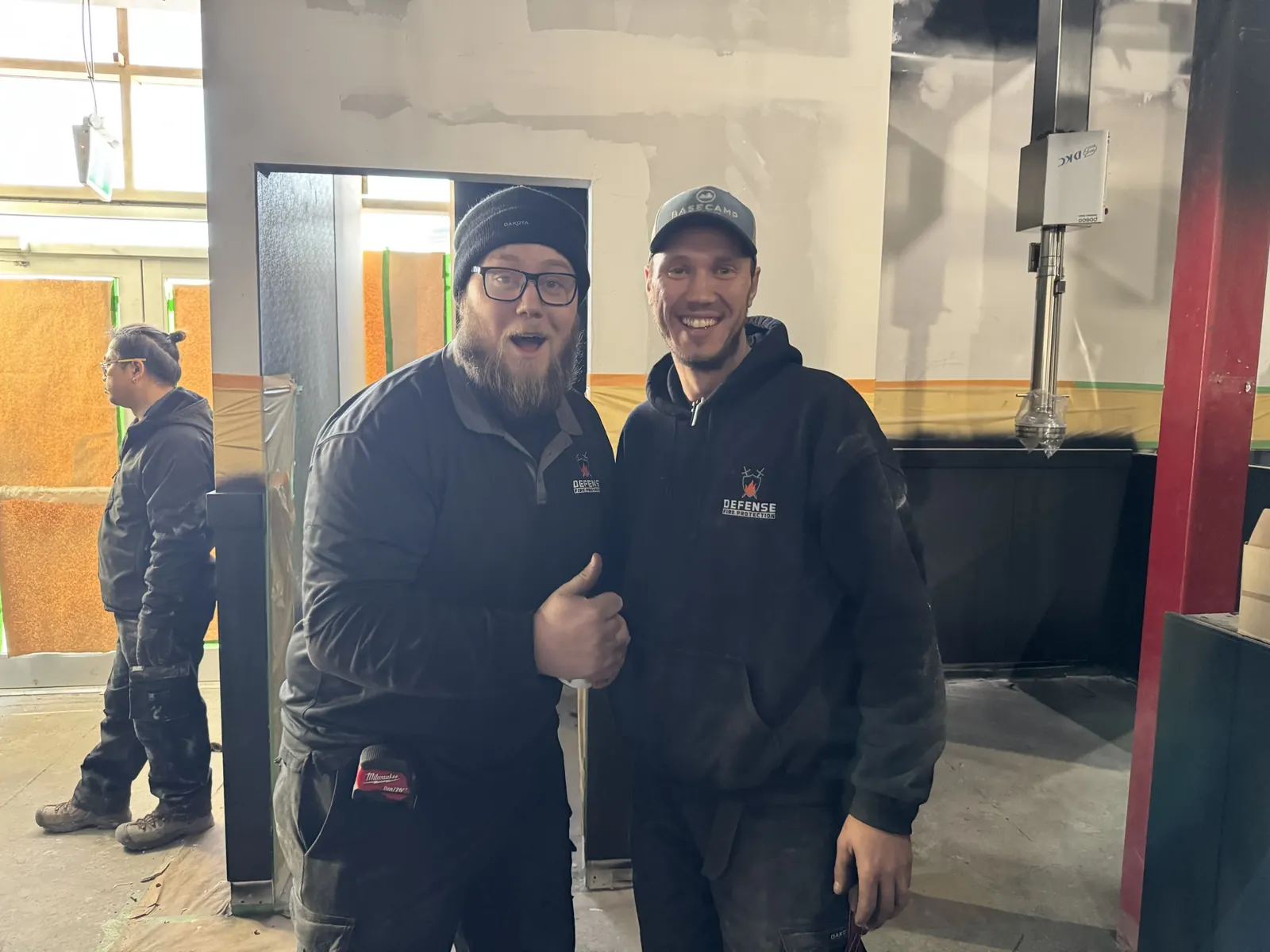
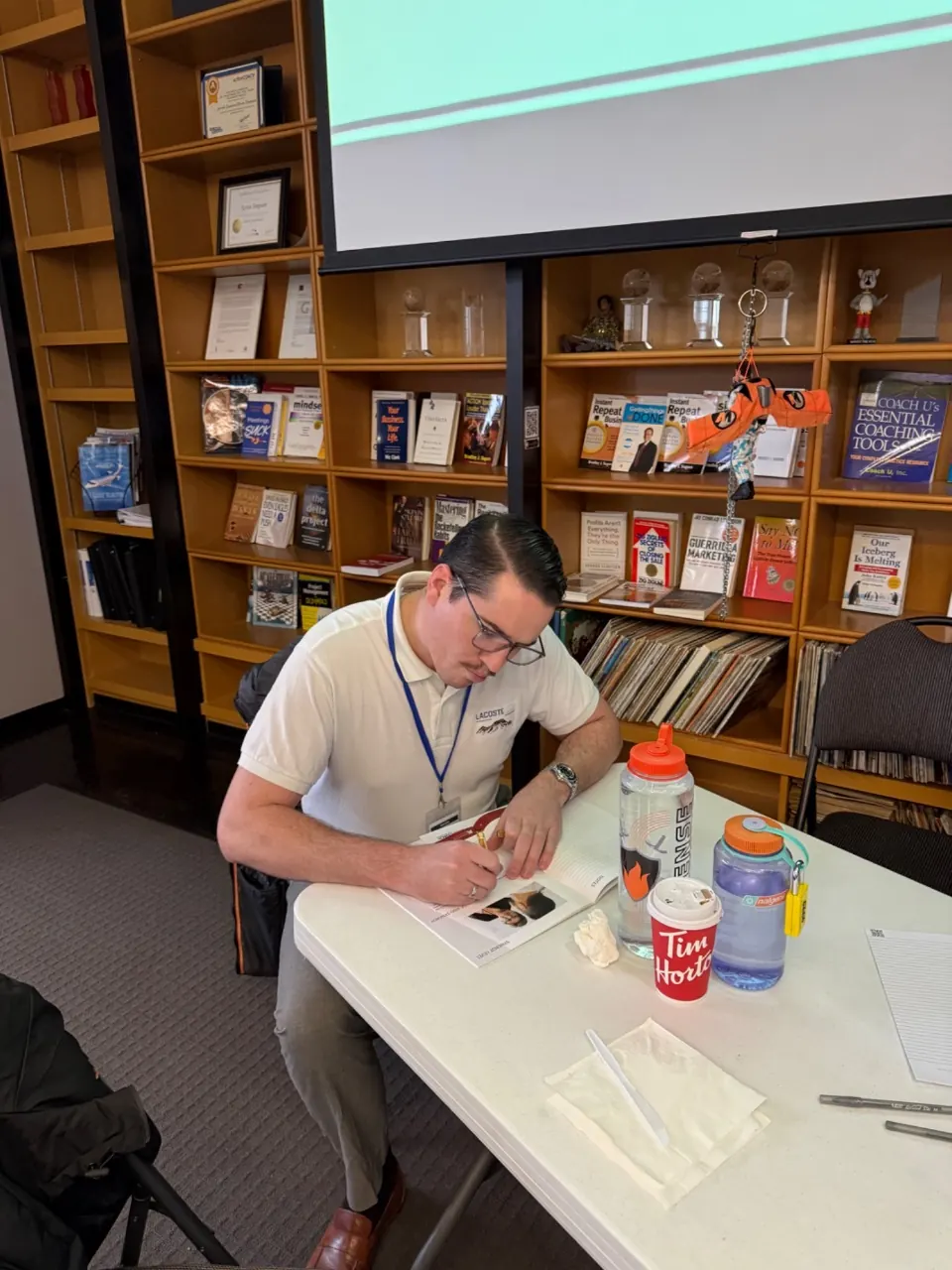
Real photos of our Calgary team on the job: installs, inspections and panel builds.
Never miss an inspection date
Tell us the date on your hood, extinguisher or alarm tag and we'll remind you a month before it expires.
What fire protection costs in Calgary
A kitchen hood inspection typically runs $275 to $750, and repairs are always quoted in writing first. For your own job, use the price estimator: ranges are built from our own quotes.
How much does a kitchen fire suppression inspection cost in Calgary?
A semi-annual kitchen suppression inspection in Calgary typically costs $275 to $750, and most single-hood restaurants pay $325 to $475. The price depends on the number of systems and cylinders and on which parts are due. Fusible links are replaced at every service. We give a written quote before any repairs. Get a price range for your kitchen.
What happens if I fail a fire inspection?
You get a list of deficiencies and a deadline to fix them. We send a written quote for the repairs, do the work with parts listed for your system, re-test, and give you updated tags and a report to hand to the Calgary Fire Department. Kitchen system repairs usually run $850 to $3,600. Estimate your repair.
Working with Defense Fire Protection
We serve Calgary, Airdrie, Chestermere, Cochrane & Okotoks from our showroom at 6560 2 St SE, Calgary, AB T2H 1J4, and reply to every request within one business day.
What areas do you serve?
Calgary, Airdrie, Chestermere, Cochrane and Okotoks, from our showroom at 6560 2 St SE, Calgary. Contact us for sites elsewhere in Alberta.
How quickly can you come out?
We reply to every request within one business day and book inspections around your hours, including before opening. Overdue inspections and fire department orders get booked first: call (403) 807-5822.
How long does a restaurant fire inspection take?
About two hours for most restaurants, depending on the kitchen layout and how many systems and extinguishers are on site. We can book before opening hours to avoid disrupting service.
In a leased space, is fire equipment the tenant’s or the landlord’s responsibility?
Your lease decides. Building systems like fire alarms and sprinklers usually sit with the owner, while equipment inside the unit, like a kitchen hood suppression system and extinguishers, is often the tenant’s. We can inspect for either party and send the report to both.
Do you install Calgary Fire Department lockboxes?
Yes. The Calgary Fire Department is requiring existing lockboxes to be upgraded, and we upgrade existing CFD lockboxes and install new ones where required. Ask about a lockbox.
Can you take over from my current fire protection company?
Yes. Send us your last inspection reports and the date on your current tags. We'll check your systems, document any deficiencies with photos, and set up your inspection schedule so nothing lapses.
Sources: National Fire Code – 2023 Alberta Edition; Alberta STANDATA 23-FCI-004 and 23-FCI-007; NFPA 10, 17A, 25, 96. General information, not a code ruling: your local fire department has the final say.
Still have a question? Ask a Calgary technician.
Send it in. A technician, not a call centre, replies within one business day.
Book an inspection or get a quote
Tell us what you have and when it was last inspected. A real person replies within one business day.
- Written quote before any work
- Photos of every deficiency
- We book your next inspection and remind you