
Fire extinguishersThe wrong fire extinguisher can make a pool chemical fire worse
The short answer
A pool chemical room should have a water-type extinguisher, not the usual ABC dry chemical unit. Most ABC agents contain ammonium compounds that can react with chlorine pool chemicals to form an explosive compound, and NFPA 430 and NFPA 10 guidance both warn against them where oxidizers are stored.
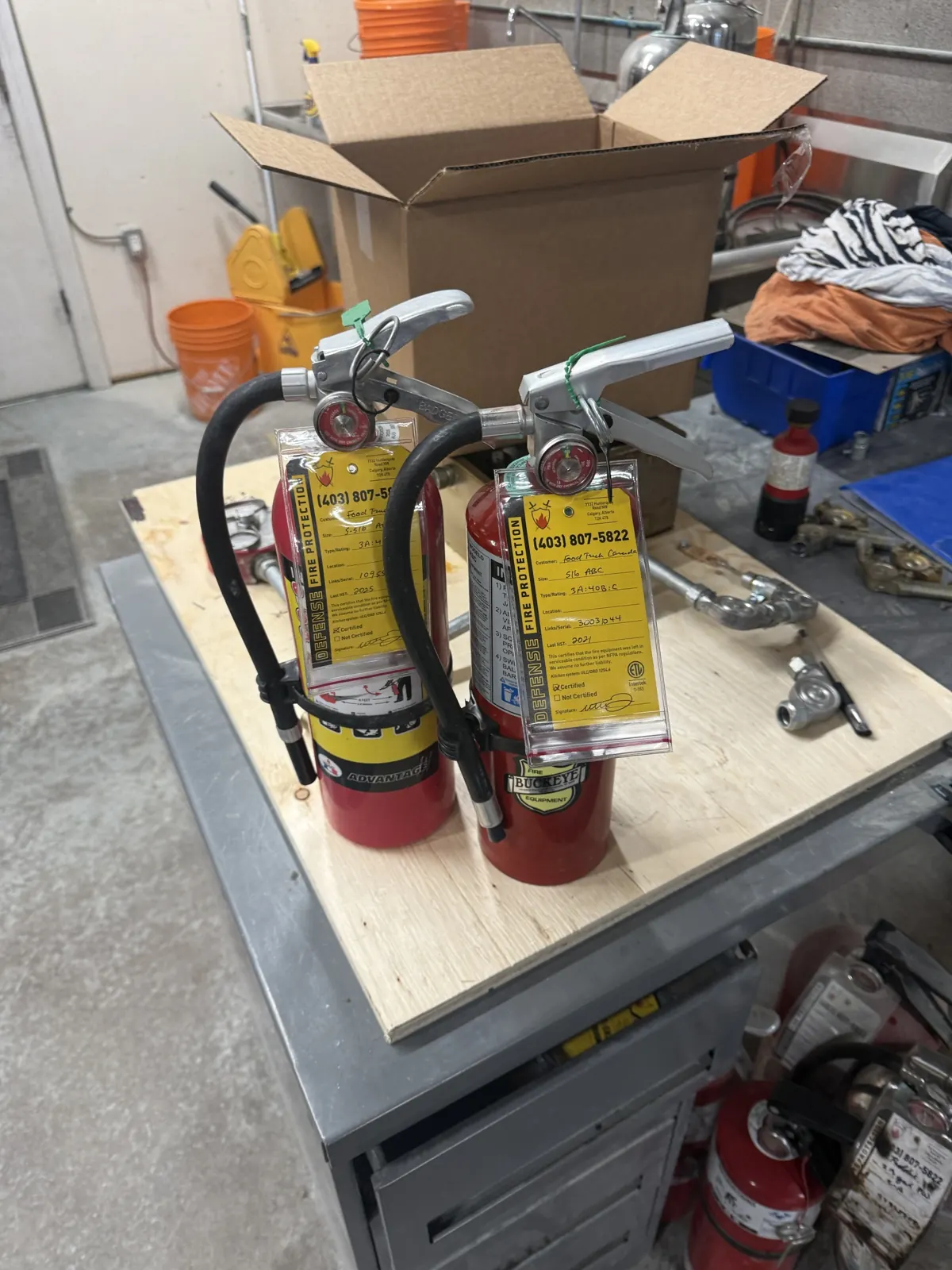
The red ABC extinguisher on almost every wall in Calgary is the right choice for most businesses. In one room it’s the wrong choice, and potentially a dangerous one: anywhere chlorine pool chemicals are stored. Checking that each extinguisher suits its room is part of our fire extinguisher service.
Why doesn’t smothering work on a pool chemical fire?
Because chlorine-based pool chemicals are oxidizers: they supply their own oxygen to a fire. NFPA 430, the standard for storing oxidizers, describes carbon dioxide and other smothering agents as being of no value on these fires.
Why shouldn’t you use an ABC extinguisher near pool chemicals?
Most multipurpose “ABC” dry chemical extinguishers use ammonium compounds. When ammonium salts meet a chlorine oxidizer, the reaction can produce nitrogen trichloride, an explosive compound. That’s why NFPA 430 prohibits placing ammonium-based dry chemical extinguishers where chlorine-releasing oxidizers are stored, and why NFPA 10’s selection guidance warns against multipurpose dry chemical extinguishers in areas with oxidizers like pool chemicals.
Halon and halocarbon “clean agent” extinguishers are also off the table in these areas unless tested to the satisfaction of the fire department, because they can react with the oxidizer too.
What this means for you: if you run a pool, hot tub, hotel, condo, gym or school with a chemical storage room, the extinguisher at that door should be a water-type extinguisher, not an ABC. Check what’s mounted there today. We can swap it and update your extinguisher layout at your next service; the price estimator gives a range for the visit.
Is the right extinguisher in the right place in your building?
Extinguisher selection isn’t one-size-fits-all. Commercial kitchens need a K-class extinguisher near the cook line (alongside the hood suppression system), server rooms are often better served by clean agent units, and combustible metal shops need Class D. Part of a proper annual inspection is checking that the right extinguisher is in the right place, not just that the gauge is in the green.
Quick answers
What fire extinguisher should be used in a pool chemical room?
A water-type extinguisher. NFPA 10 and NFPA 430 guidance point to water-type extinguishers, not ABC dry chemical, where oxidizers such as chlorine pool chemicals are stored.
Why not an ABC extinguisher in a pool chemical room?
Many ABC agents contain ammonium compounds that can react with chlorine oxidizers to form an explosive compound.
Sources
- NFPA 430, Code for the Storage of Liquid and Solid Oxidizers
- NFPA 10, Standard for Portable Fire Extinguishers
- Manufacturer guidance on extinguisher selection for oxidizers
This article is general information, not a code ruling: your local fire department has the final say.