Kitchen suppressionWhy you can’t mix fire suppression brands (a Kidde + Badger example)
The short answer
You can’t mix brands because a kitchen hood suppression system is listed (UL 300 or ULC) only as the exact package of parts the manufacturer tested together. Put a Kidde cylinder on a Badger control head, or add a hose the manual doesn’t list, and it is no longer a listed system, so it fails inspection. The fix is to replace the mismatched parts with the correct brand’s listed parts, or replace the system.
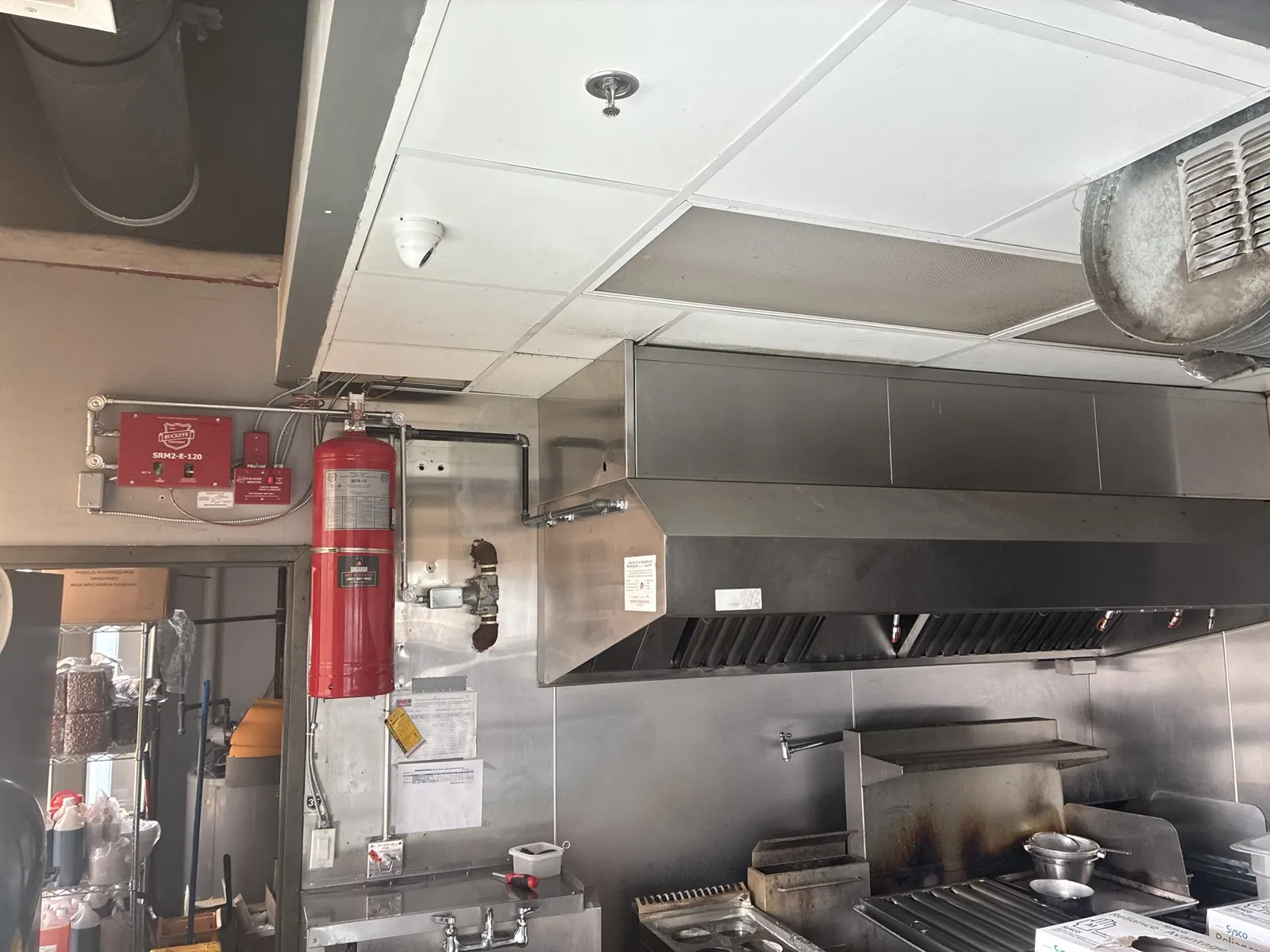
We regularly find kitchen fire suppression systems in Calgary that have been “repaired” with whatever part was on the truck: a Kidde cylinder on a Badger control head, a hardware-store flex hose, an older tank that doesn’t match the head. The system looks complete. It isn’t. Mixed components are one of the most common reasons a kitchen hood suppression inspection fails.
Why does a suppression system have to be one brand?
Because the listing covers the whole tested package, not individual parts. Kitchen hood systems like Kidde WHDR, Badger Range Guard, Amerex KP and Buckeye Kitchen Mister are “pre-engineered”: the manufacturer fire-tests the exact cylinder, control head, hoses, pipe sizes, nozzles and agent together. That tested package is what earns the UL 300 or ULC listing Alberta requires, and the listing only covers the parts named in that manufacturer’s design, installation, operation and maintenance (DIOM) manual.
Swap one component for another brand’s part and you no longer have a listed system. You have a collection of parts nobody has ever tested together. See the brands we service for the systems we carry parts for.
What does the manufacturer say about mixing parts?
Badger says it in writing. Badger Product Bulletin 439-0906 (August 2006), “Don’t mix pre-engineered fire systems brands”, warns service personnel not to substitute other brand-name parts when installing, repairing or servicing Badger kitchen or industrial dry chemical systems. In summary, it says:
- Every system must follow its UL-listed DIOM manual plus the applicable NFPA standards and local regulations.
- It is not permissible to interchange the faceplate or any other part that isn’t specifically listed in the Range Guard, Industry Guard or Automotive Paint Booth manuals.
- The only exception is a small group of Range Guard systems upgraded between August 2003 and August 2006 with a Kidde-branded faceplate (covered by an earlier bulletin, 434-0803).
It goes further than brands. When we asked Kidde’s technical support whether older cylinders can be used with the newer Badger UCH control head, the answer was a flat no: they are not cross-listed. Same family of products, still not allowed together.
Can I use a generic flex hose on my hood system?
Only if your brand’s manual lists one, and on a Badger Range Guard it doesn’t. Flexible hoses are a common shortcut, especially to reach a pizza oven or an appliance on casters. Some brands have a listed flexible discharge hose. Range Guard’s only listed flexible hose is the braided stainless line between the control head and the cylinder, so a generic flex hose on the discharge piping of a Badger system is an unlisted part, no matter how sturdy it looks.
What this means for you: if your inspection report lists “mixed components”, “non-listed parts” or “unlisted hose”, the fix is to replace the mismatched parts with the correct brand’s listed parts, or replace the system. And a technician trained on only one brand shouldn’t be servicing another brand’s system. Get a price range for parts or a replacement before you call.
How do I check my own system for mixed parts?
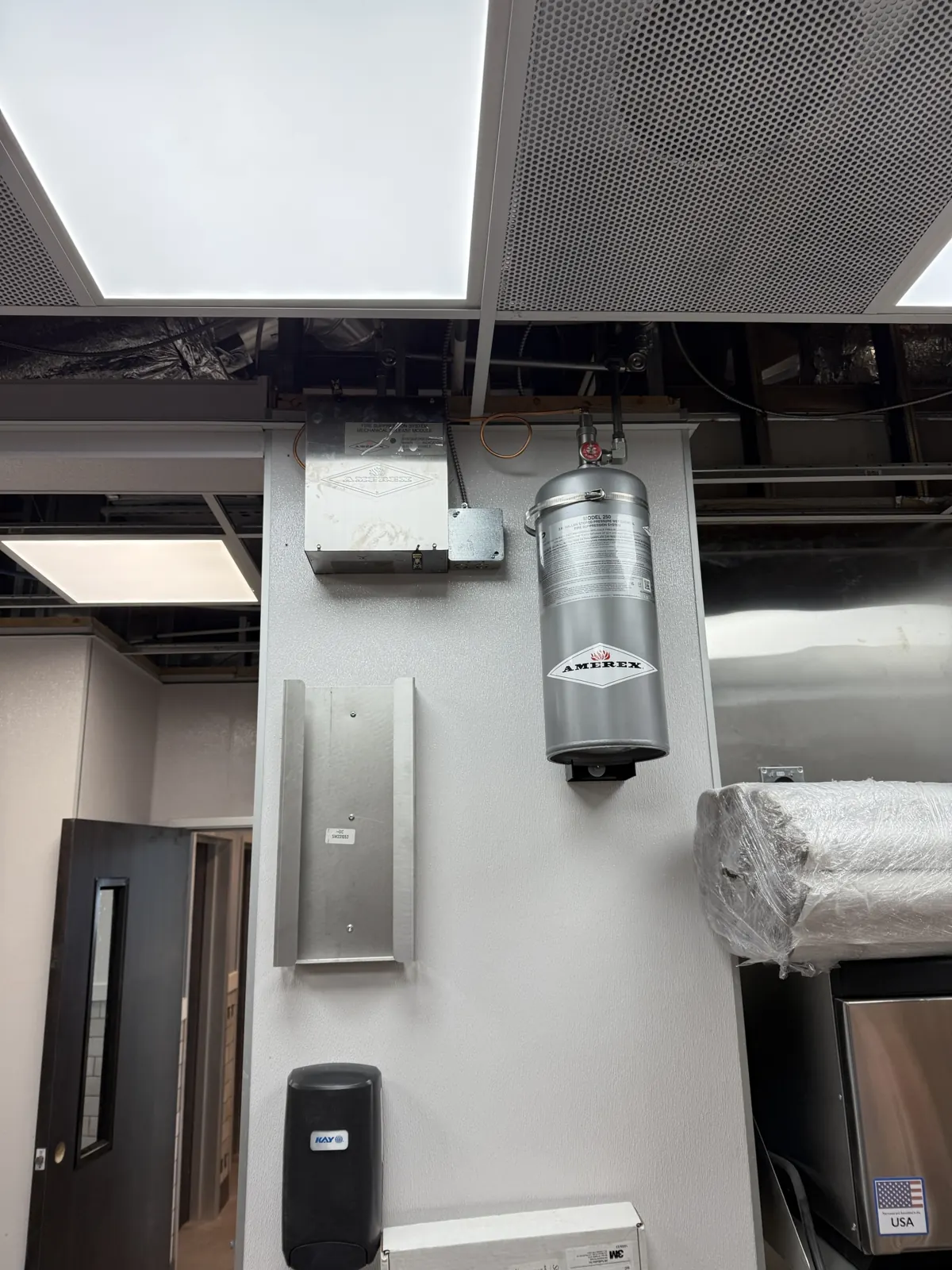
- Look at the label on the cylinder and the control head. The brand names should match.
- Check your last service tag: it should name the system brand and the company that serviced it.
- Look for hoses on the piping above the cook line. Ask your service company if each one is listed for your brand.
- If anything doesn’t match, send us a photo and we’ll tell you what you’re looking at.
Quick answers
Can a Kidde cylinder be used on a Badger system?
No. Kidde and Badger parts are not interchangeable unless the manufacturer’s manual specifically lists them together. A mixed system is not a listed system and should fail inspection.
Is a mixed-brand kitchen suppression system dangerous?
It can be: it may not discharge the right amount of agent at the right pressure, because the parts were never tested together. That’s why the listing, and your insurance, depend on matching parts.
Sources
- Badger Fire Protection, Product Bulletin 439-0906 (2006), “Don’t mix pre-engineered fire systems brands”
- Kidde Fire Systems technical support, 2026
- Alberta STANDATA 23-FCI-004 (commercial cooking operations)
- NFPA 17A, Standard for Wet Chemical Extinguishing Systems
This article is general information, not a code ruling: your local fire department has the final say.