
Kitchen suppressionThe little metal link that decides when your kitchen fire system goes off
The short answer
A fusible link is a small soldered metal link that melts at a set temperature and fires your kitchen hood suppression system. Its rating should be chosen from a temperature study of your kitchen at full cooking load: too low causes false discharges, too high means a slow response. Links are replaced at every semi-annual inspection.
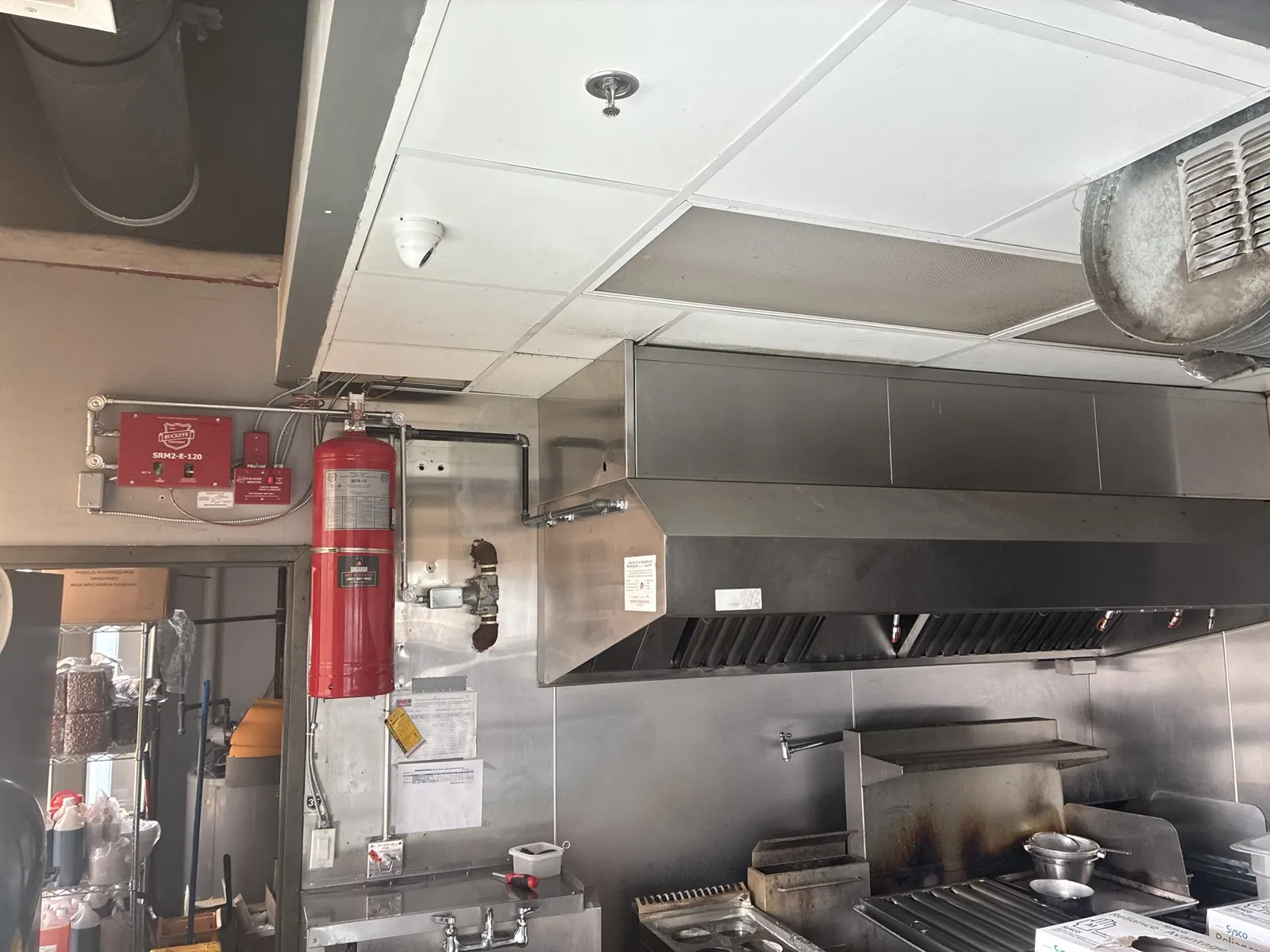
Above every fryer, griddle and char broiler in a commercial kitchen there’s a small two-piece metal link holding a steel cable tight. It’s called a fusible link, and it’s the reason your kitchen hood suppression system knows there’s a fire. Most restaurant owners have never noticed it.
How does a fusible link work?
It holds the detection cable tight until heat melts its solder. The link is two metal plates joined by a solder that melts at a set temperature. When a fire heats the link past its rating, the solder lets go, the detection cable goes slack, and the control head fires the system: agent discharges through the nozzles and the gas or power to the appliances shuts off.
Why does the fusible link temperature rating matter?
Because the wrong rating either fires the system for no reason or fires it late. Links come in different temperature ratings, and the right one depends on how hot that spot normally runs during cooking. Pick too low, and normal cooking heat can melt it: an unwanted discharge in the middle of a dinner rush. Pick too high, and the system reacts late, while a kitchen fire grows by the second.
Manufacturers require a temperature study to choose the right rating: measuring the actual temperature above each appliance and in the duct while the kitchen is fully running. Guessing, or defaulting to the highest rating, isn’t good fire protection.
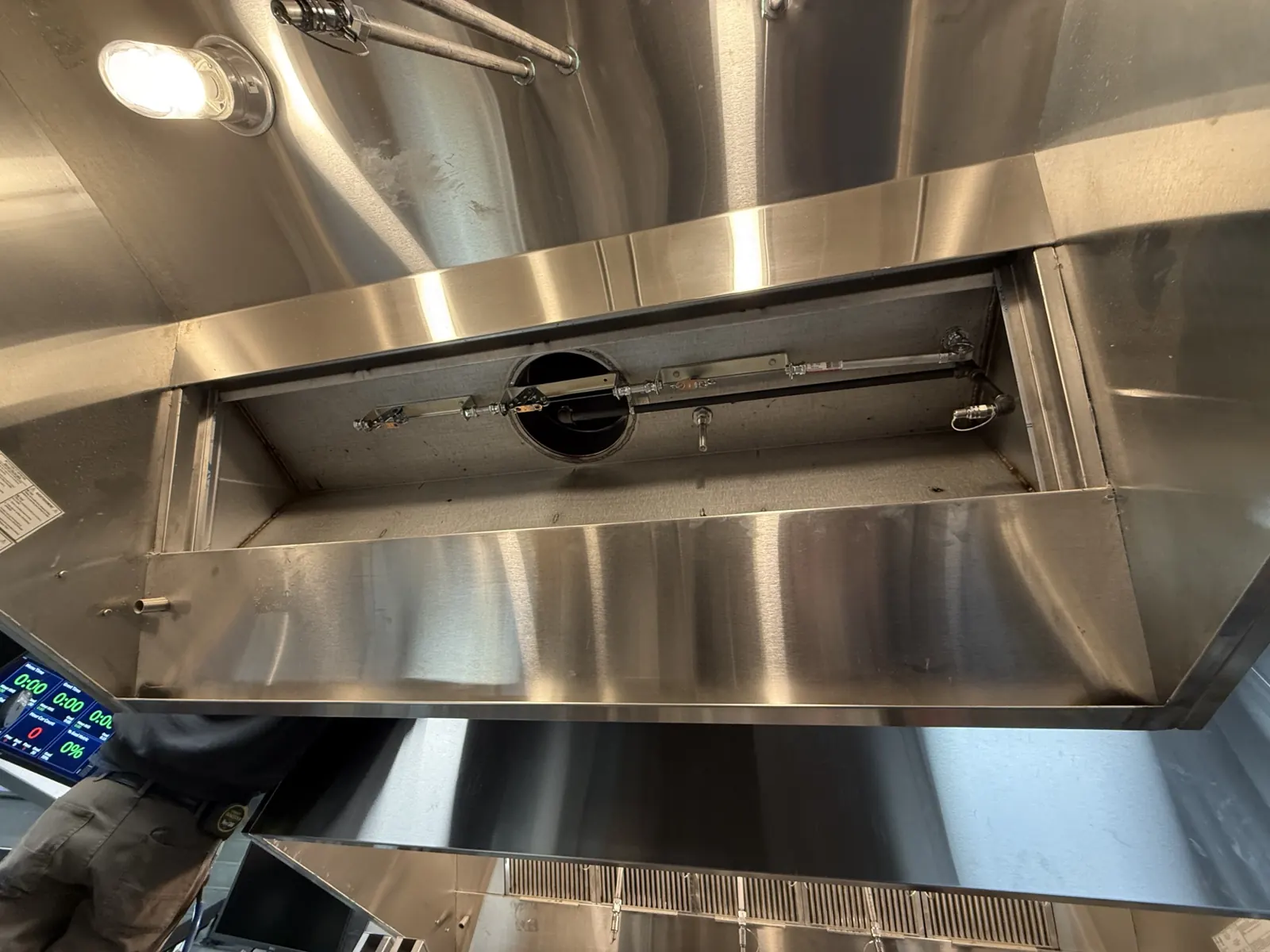
Why are fusible links replaced at every service?
Grease builds up on links, and repeated heat cycles weaken the solder. That’s why links are replaced at the semi-annual inspection, and the date stamp on the link is one of the things an inspector checks. If your current provider only looks at them, compare with our price estimator: new links are part of a proper service.
What this means for you: if your system has gone off for no reason, or you’ve changed appliances or cooking style (say, added a char broiler), ask for the link temperatures to be reviewed. Moving equipment matters too: see moving appliances under the hood. And make sure your semi-annual service includes new links, not just a visual check. The same applies to food truck systems.
Quick answers
How often are fusible links replaced?
At every semi-annual kitchen suppression service, according to the manufacturer’s manual and NFPA 17A practice.
Why did my kitchen suppression system discharge with no fire?
One common cause is a fusible link rated too low for the heat at that spot. A temperature study shows the right rating.
Sources
- Manufacturer DIOM manuals (Kidde, Badger, Amerex)
- NFPA 17A, Standard for Wet Chemical Extinguishing Systems
- Industry training material on temperature studies for kitchen fire suppression design
This article is general information, not a code ruling: your local fire department has the final say.