First of all, if you're reading this, thank you for your support! I am just beginning on my blog posting journey, but am planning to post more as I go.
My name is Martin Buffy and I am the founder and co-owner of Defense Fire Protection. I started this business in August 2022, with the mission to help improve the fire safety industry here in Calgary, and eventually all over the country. We strive to always improve, and educate our customers as best we can, on the different aspects of life safety systems, such as kitchen hood wet chemical fire suppression systems.
The purpose of this blog post is to highlight a job (completed earlier today - Friday Jan 9th/2026), where we had to fix a catastrophically deficient system. Every aspect of the previous fire suppression system installation was done incorrectly, almost to the point where we started to think that this system was purposefully installed incorrectly. This install was completed by one of our local competitors, in Calgary AB. I will try to break this down as best I can.
Here is the timeline
- Pre-August 2025: The old owner of the pizza shop sells the store to the new owner. Before handing over the keys to the new owner, the old owner decides to remove the fire suppression system control heads. He also removes the pull station of the fire suppression system. So not only does he take the kitchen hood system but he also takes the one for the ecology unit. The ecology unit is a unit that cleans the greasy air from the kitchen hood exhaust, so that it can be vented out just above street level, and not have a negative effect on neighboring businesses. (Remember about the ecology unit for later in the story). To go back to the old owner, his goal in removing and keeping the systems was to make a few hundred bucks by trying to sell the system online. The contractor hired by the new owner, upon taking possession of the space (from the old owner), is faced with the challenge of being without the fire suppression systems. The lack of fire protection systems will definitely be caught by the city, prior to the new owner getting his business license. He must find a solution to help his client.
- Aug 2025: I'm driving by the store on the weekend, with my girlfriend in the car, and I can see that the sign for the business name has changed. I pull over and check inside, and I see some construction is going on (but no one is inside). So I go back to the car, get a piece of paper and a business card, and write down: "Call me about your fire suppression system", and slip it into the crack of the locked entrance door. I drive away, and 30 minutes later, I receive a phone call from the contractor. "I need a quote for the new system". So I send him the quote, follow-up a few times, and he ends up ghosting me. A few months later, the new owner, calls us to come in for an inspection. Turns out, someone else got the job, that's why I got ghosted. They had come in "cheaper" than we did.
- Late Dec 2025 (during Christmas break): We get the call for the inspection and sent our service manager Philip, who found a lot of deficiencies on site (which will be outlined below). We let the new owner know he will need to pay over $10k to fix the system that was just installed by the other contractor. The severity of the deficiencies were impossible to overlook. One of our competitors had installed and signed off on the system, as being certified and meeting Code and this is how the business was able to open in the first place.
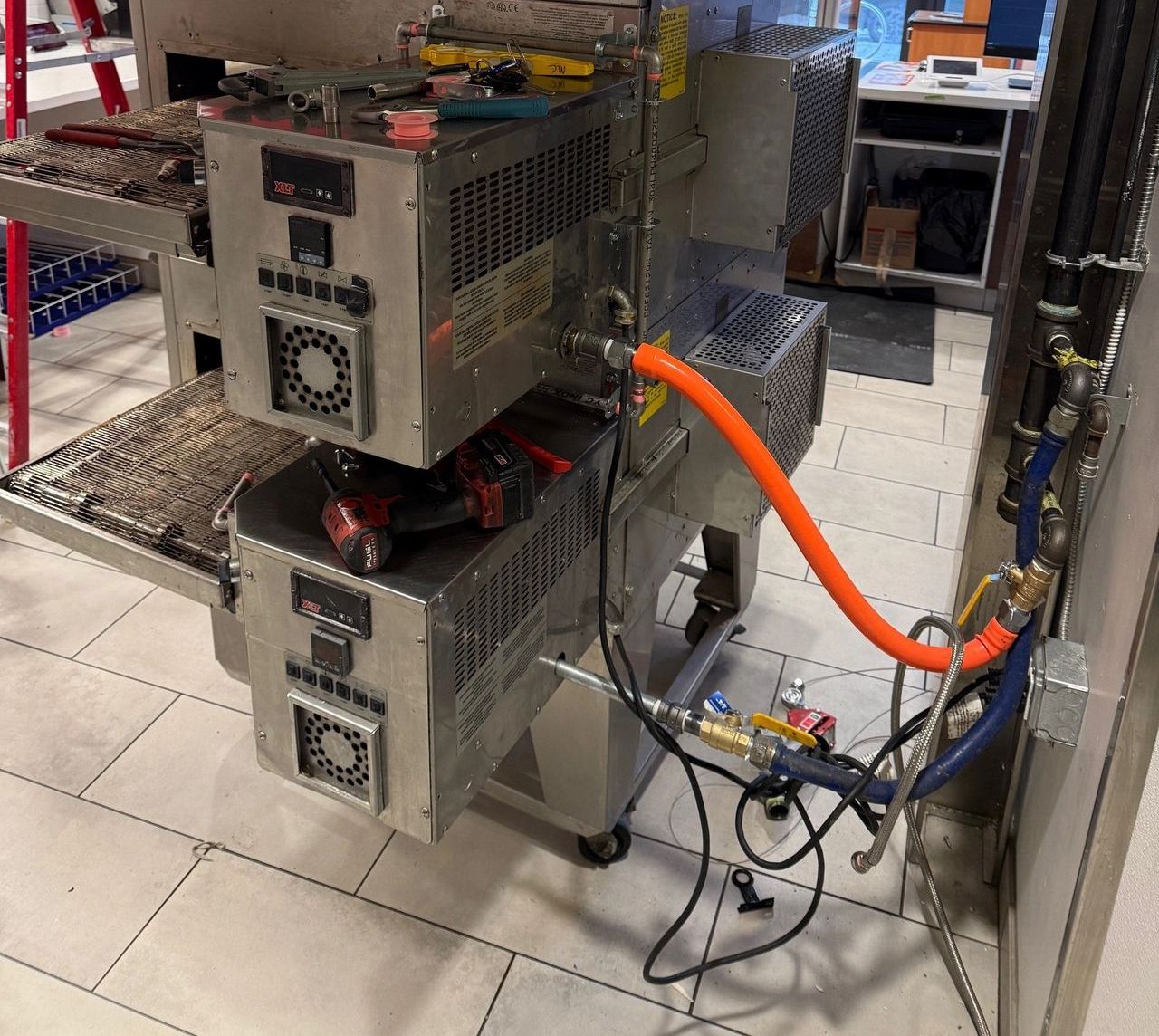
- Early Jan 2026 (this week - week of Jan 5th): It will take too long to get an ANSUL distributor to come fix the system, and the Calgary Fire Department has now shut down the store, meaning the owner can no longer earn revenue. The owner asks us to find an alternative. The only other brand of fire suppression system we know that can cover ecology units is Buckeye, and they stock equipment in Edmonton. So I send the owner a quick quote, and get his approval on Monday morning. We collect start-up deposit the same day. That afternoon, the material is already in transit from the supplier. We book our technicians for that same week, Friday Jan 9th (today), having to reschedule multiple other jobs to make it work. We also organize a gas fitter and electrician to complete the necessary connections. We show up on site, and our technicians work hard to get the job done. Our sub-trades are also on site (at times 4-5 people on site at once), all organized by our team. The system gets replaced fully with a dual-tank (BFR-10 & BFR-20) Buckeye Kitchen Mister system. Our technicians work into the late afternoon, Friday to get the job done. Our techs killed it! For this job, the whole team was involved! Our service manager Philip and lead tech Chad as leads on the job, and Daimler and Matt assisting with the installation. My role was to bring the lunch for the crew! As of right now, the job is done, we were working with Johnson Controls (assisting on fire alarm portion) to get the system connected to the building fire alarm system.
In the next section I will describe the deficiencies, with images.
DEFICIENCY #1
Cylinder wrong size and not connected to the system piping!
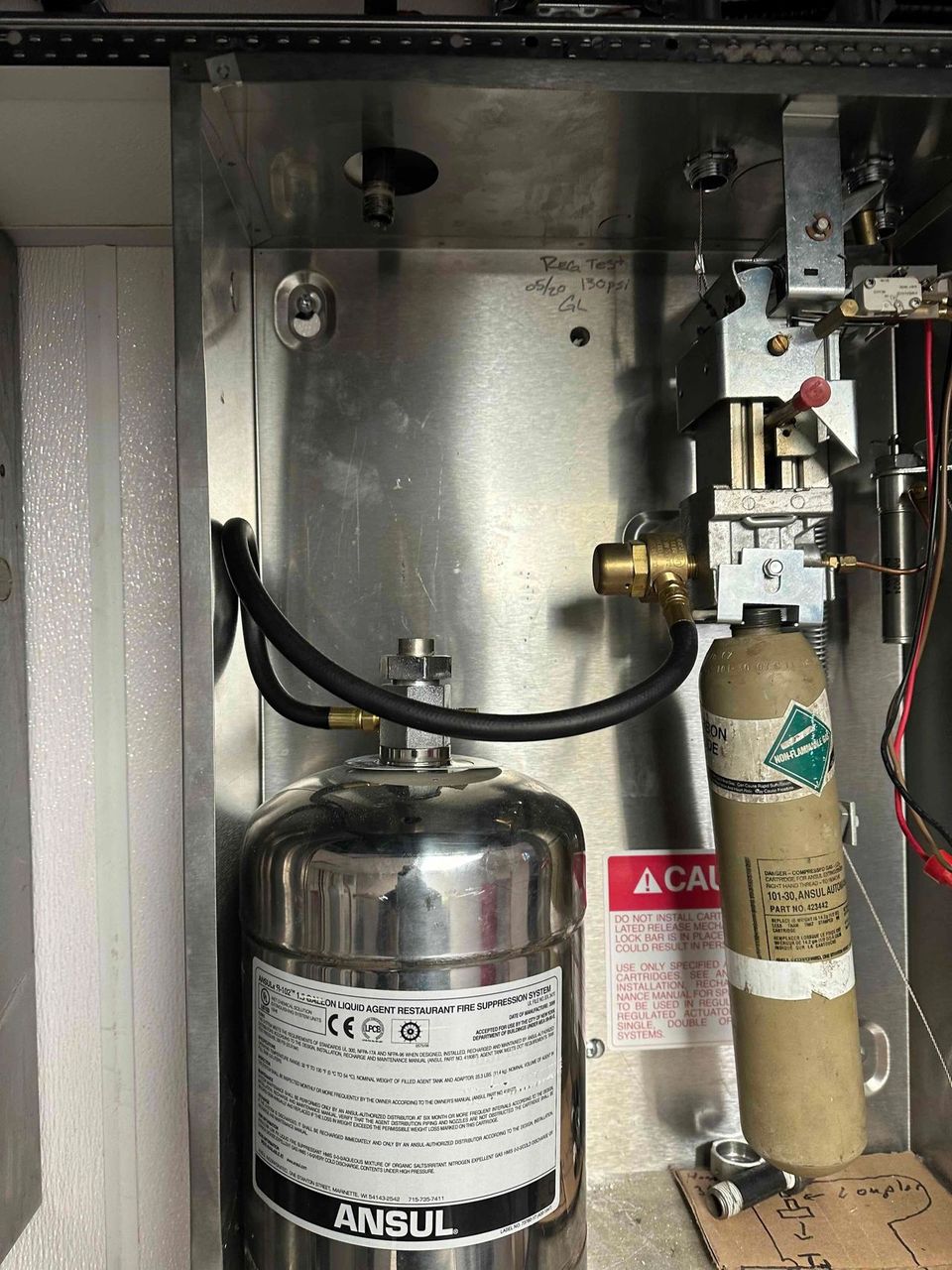
DEFICIENCY #2
Air cylinder for system disconnected from gas valve. The cable that is attached to the air cylinder is not connected to anything. Air cylinder is the small cylinder with small copper tubing going to it. This deficiency means that in case of FIRE, the system will not trip the gas valve, which is a pull-to-trip, meaning you need to pull on the cable to trip it. In a fire situation, this means that the gas will be able to continue fueling the fire, even after the activation of the system.
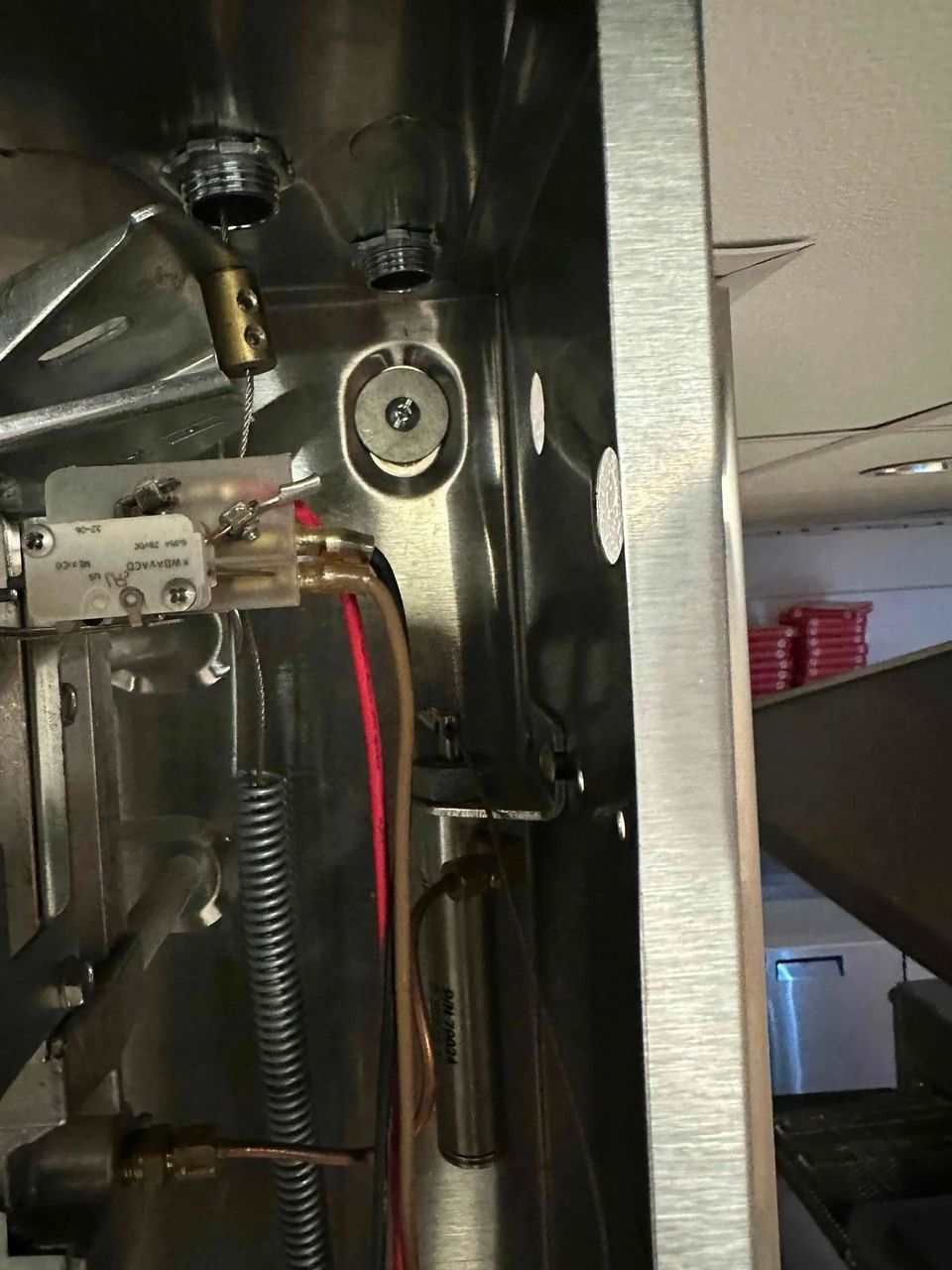
Additionally, you can see the electrical micro-switches that are not connected to anything (loose wiring). On the kitchen hood system, these are supposed to be connected to the following functions:
- Fire alarm: The fact that it's not connected means that if there is a fire in this restaurant, the fire alarm for the 20+ apartment building above the restaurant will not activate. See the problem?
- HVAC functions. In case of fire, the exhaust fan should turn on, so that the smoke from the fire is being exhausted out, and the fire is being drawn into the kitchen hood, where it can be more easily contained. The Makeup air unit, which provides replacement air for the exhaust, to prevent negative pressure in the space, must shut down, to prevent fanning effects on the fire. In this case, this MUA vent configuration did not require the unit to shutdown (according to Code), but it is usually something that would be connected.
- Electric power to outlets under the kitchen canopy must shut down. This is so the power to the cooking equipment turns off, as per Code and local AHJ requirements (Authority Having Jurisdiction - Calgary Fire Department).
- On the kitchen hood system, there is also supposed to be a switch for the connection to the 2nd control head (for ecology unit), and that control head is supposed to be 120VAC actuated, so that in case of fire under the kitchen hood fire, the ecology unit system will also activate. In this case the ecology unit system was also the incorrect type, a mechanical style, which prevents from the necessary controls and sequence of operations (as required by NFPA) to happen.
Also as an additional note, even if we did want to make the necessary connections, the required proper-style micro-switches were not present. I.e. Fire alarm microswitch.
DEFICIENCY #3
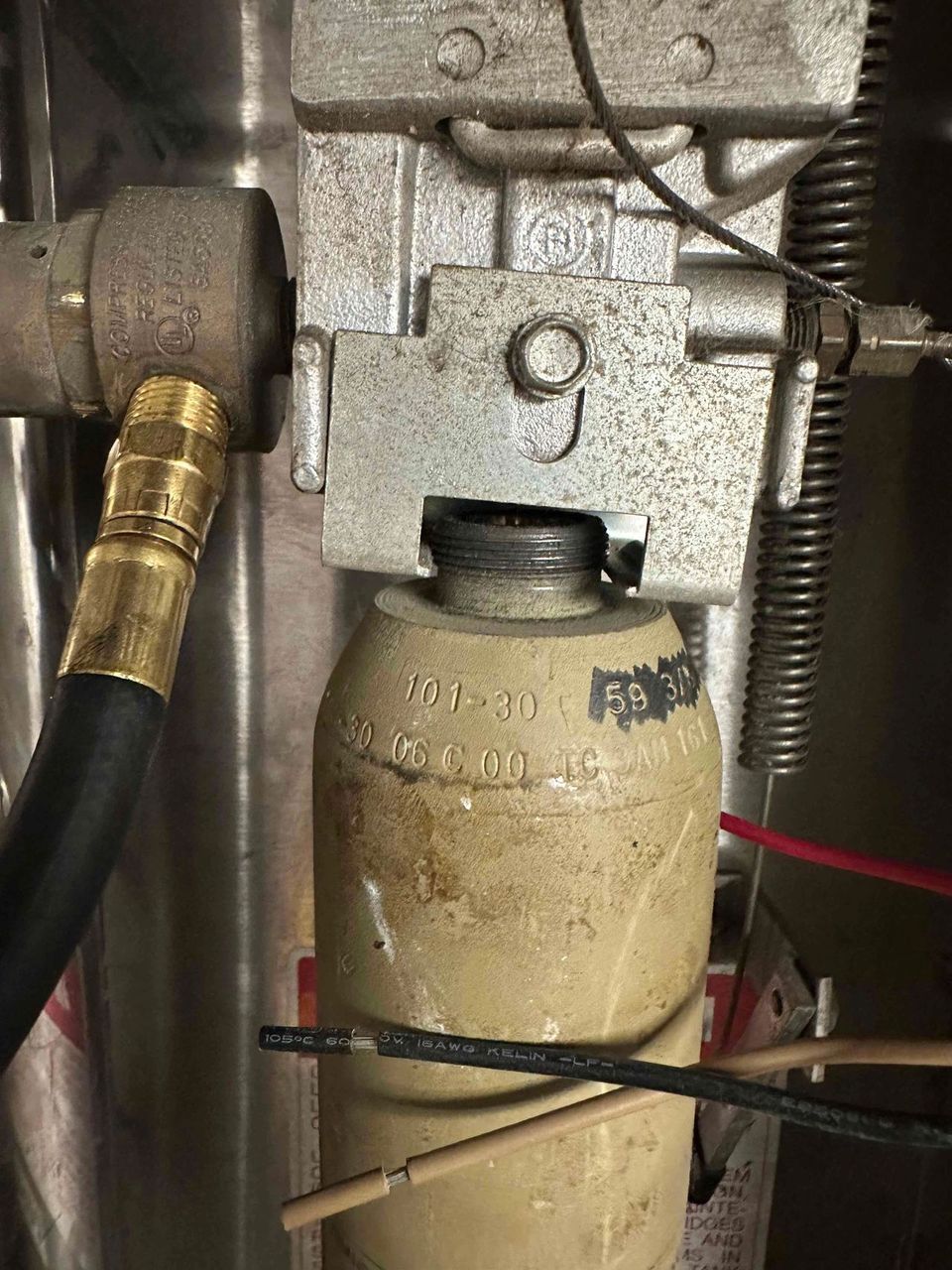
Upon removal of covers and inspection of both system control heads (this is also confirmed by store camera footage, proving we did not tamper with it prior, for the picture), both cartridges were found unscrewed, which means that if the system was to activate, it would not pressurize the cylinders, as per requirements. This means no fire fighting wet chemical agent would ever make it to the fire.
DEFICIENCY #4
The following two pictures show the condition of the cylinder burst discs. The function of these are to hold the pressure (lower than 100-120psi), in the cylinder, when it is getting pressurized during a fire condition. In this case, both burst discs were not leak tight, preventing the system from ever functioning properly. Our team estimates, that with a damaged burst disc such as shown below, maybe 25% of the chemical from the cylinder would ever make its way to the fire. And that is, if the piping was even connected!
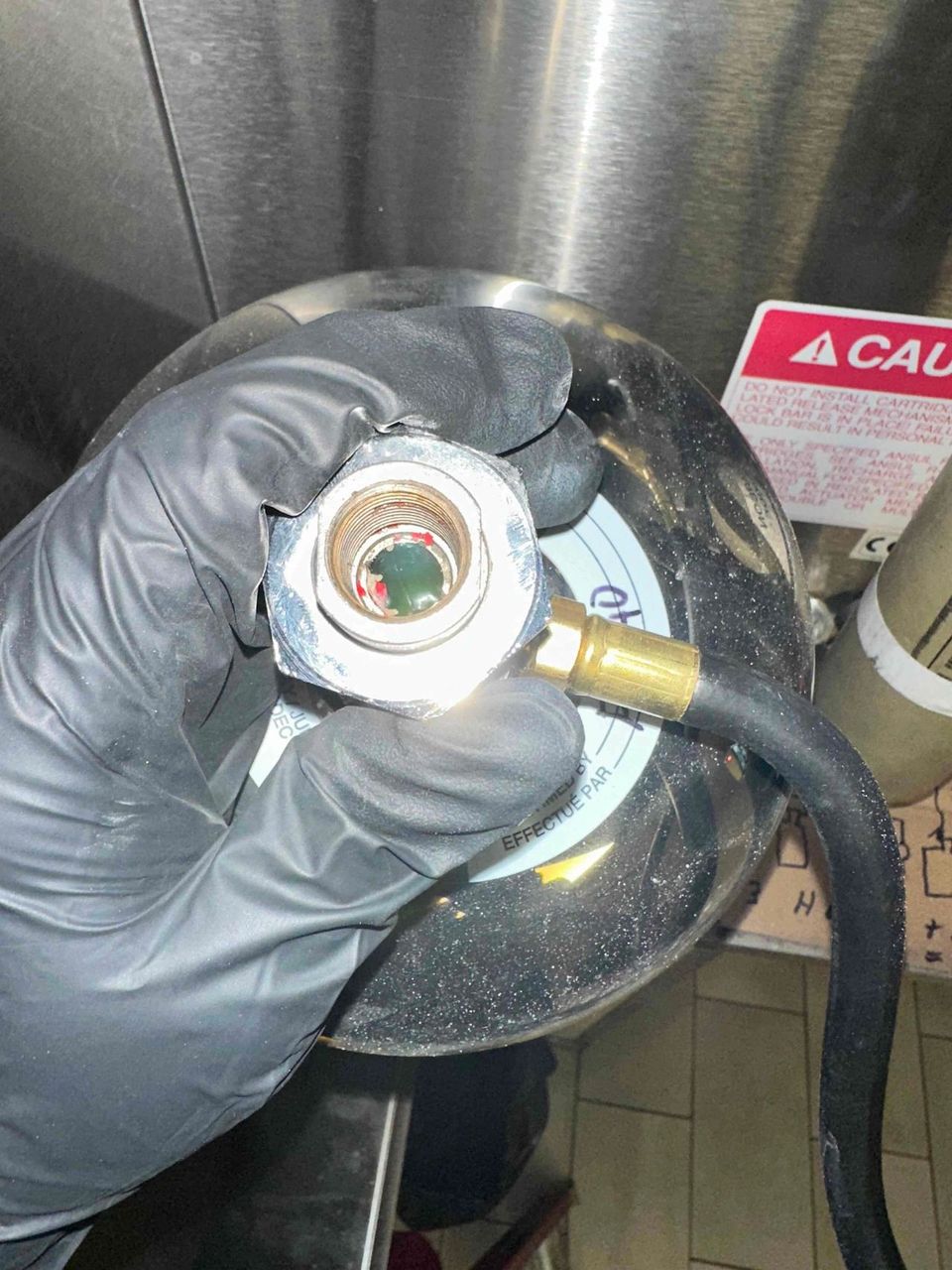
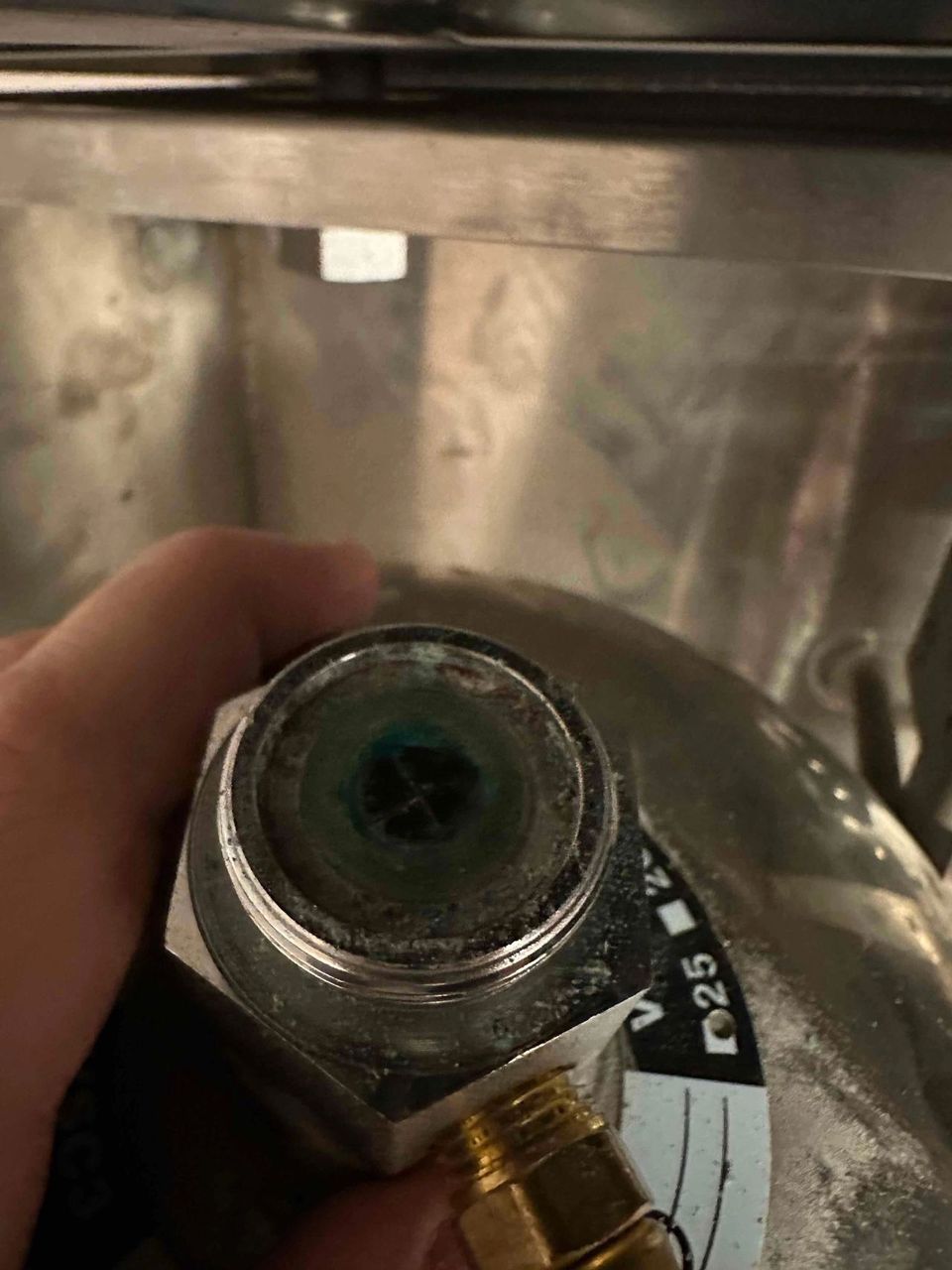
DEFICIENCY #5
Both nozzles (duct and plenum) in kitchen hood, found to be incorrect type. 1N nozzles (as shown) are to be used only for horizontal plenum coverage. For vertical plenum coverage, a 1W nozzle is to be used. For duct coverage (for the size of the duct), a 2W nozzle is to be used. As per manufacturer requirements. We don't make the rules!
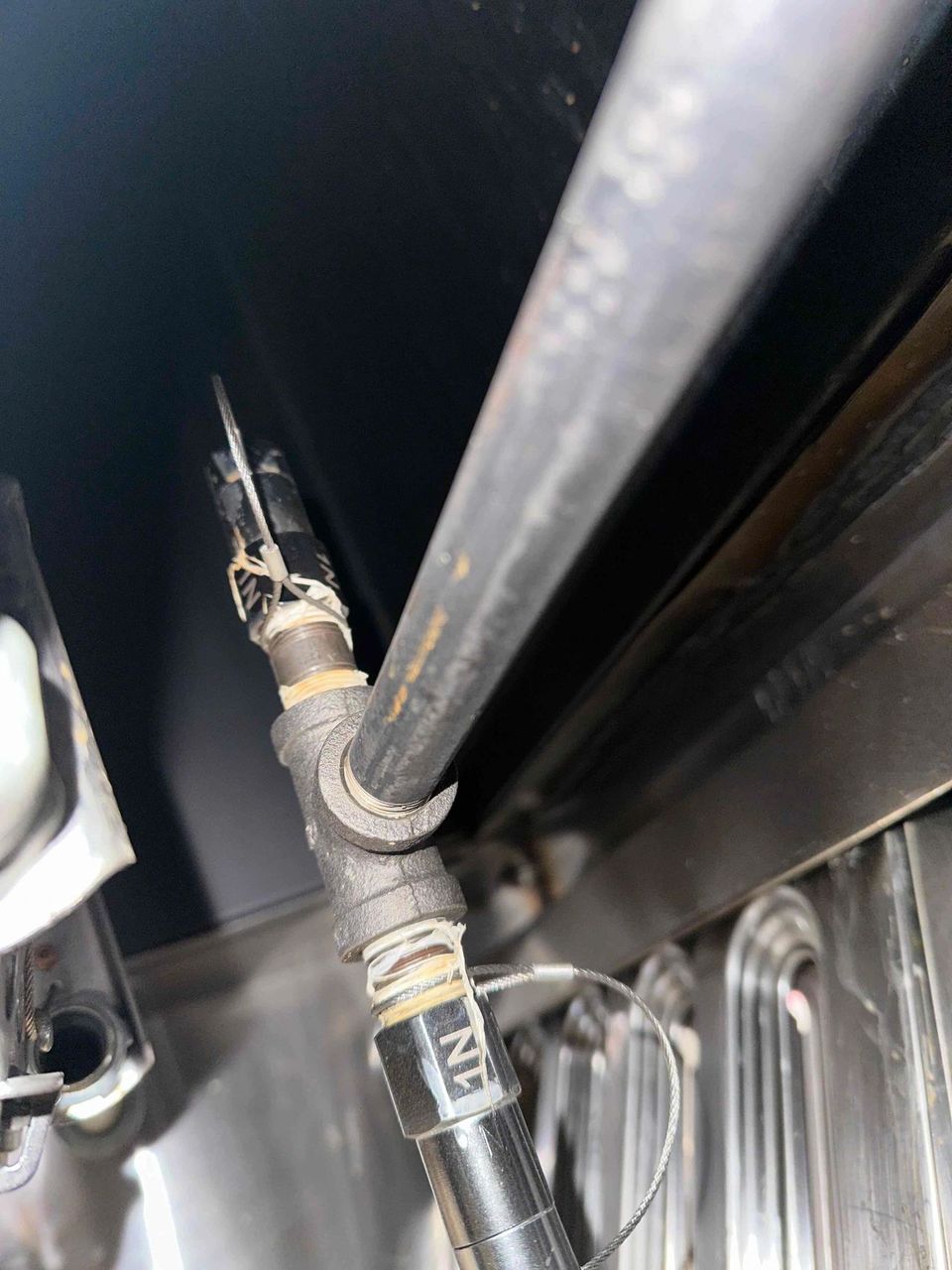
DEFICIENCY #6
Actuation hose (black hose) is not listed hose for use with the system. It may have been picked up at the local hardware store, to save a few bucks. Can it hold the pressure that will go through it, in case of fire? Who knows, let's hope for the best!
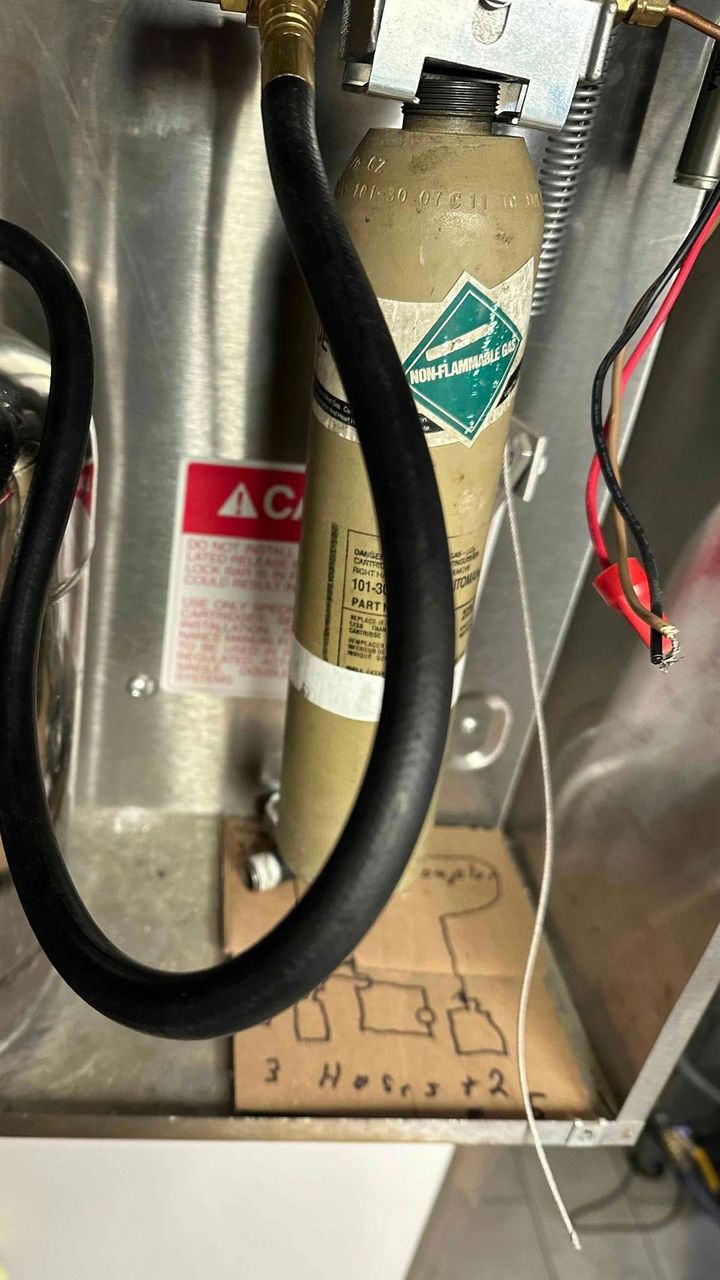
DEFICIENCY #7
ANSUL Systems can only be piped using 3/8 piping and fittings. In this picture we can see 1/2 fittings are being used.
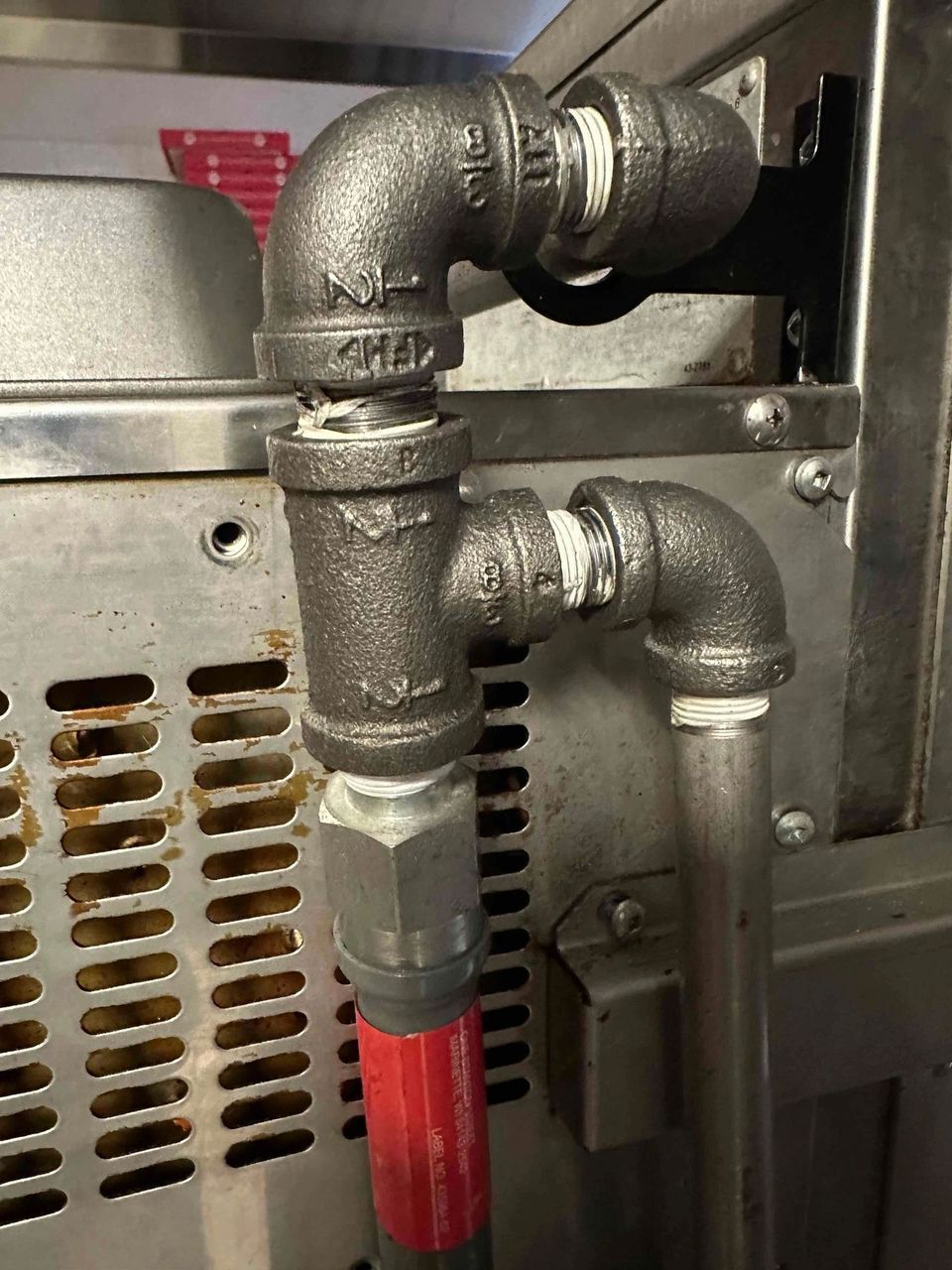
DEFICIENCY #7
Nozzle shown inside the ecology unit. For this style of coverage, a 1N nozzle is to be used. In the picture we can see a 1W nozzle.
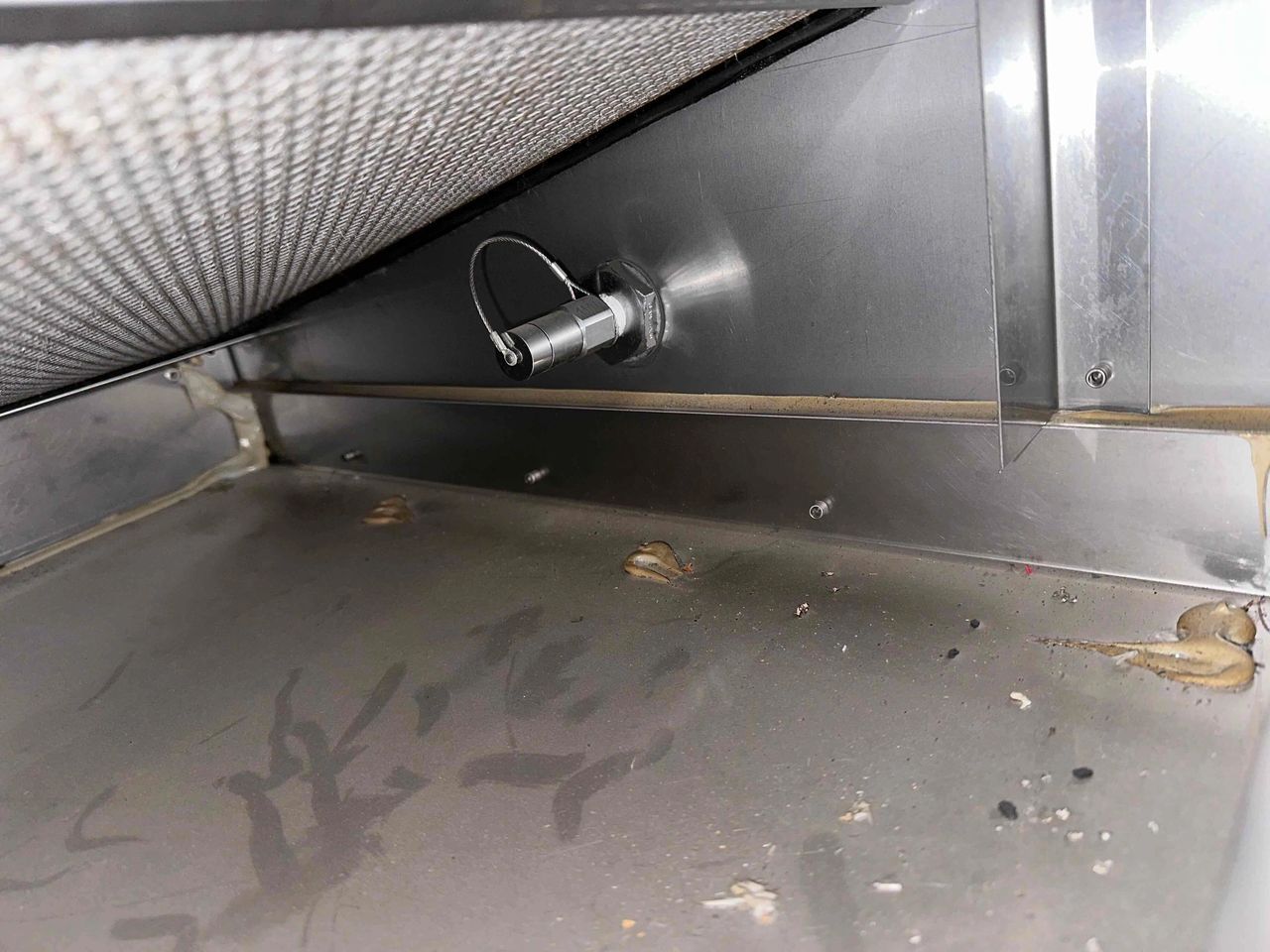
DEFICIENCY #8
Entire compartment of ecology unit non-protected, modifications have been made from original piping system and detection network.
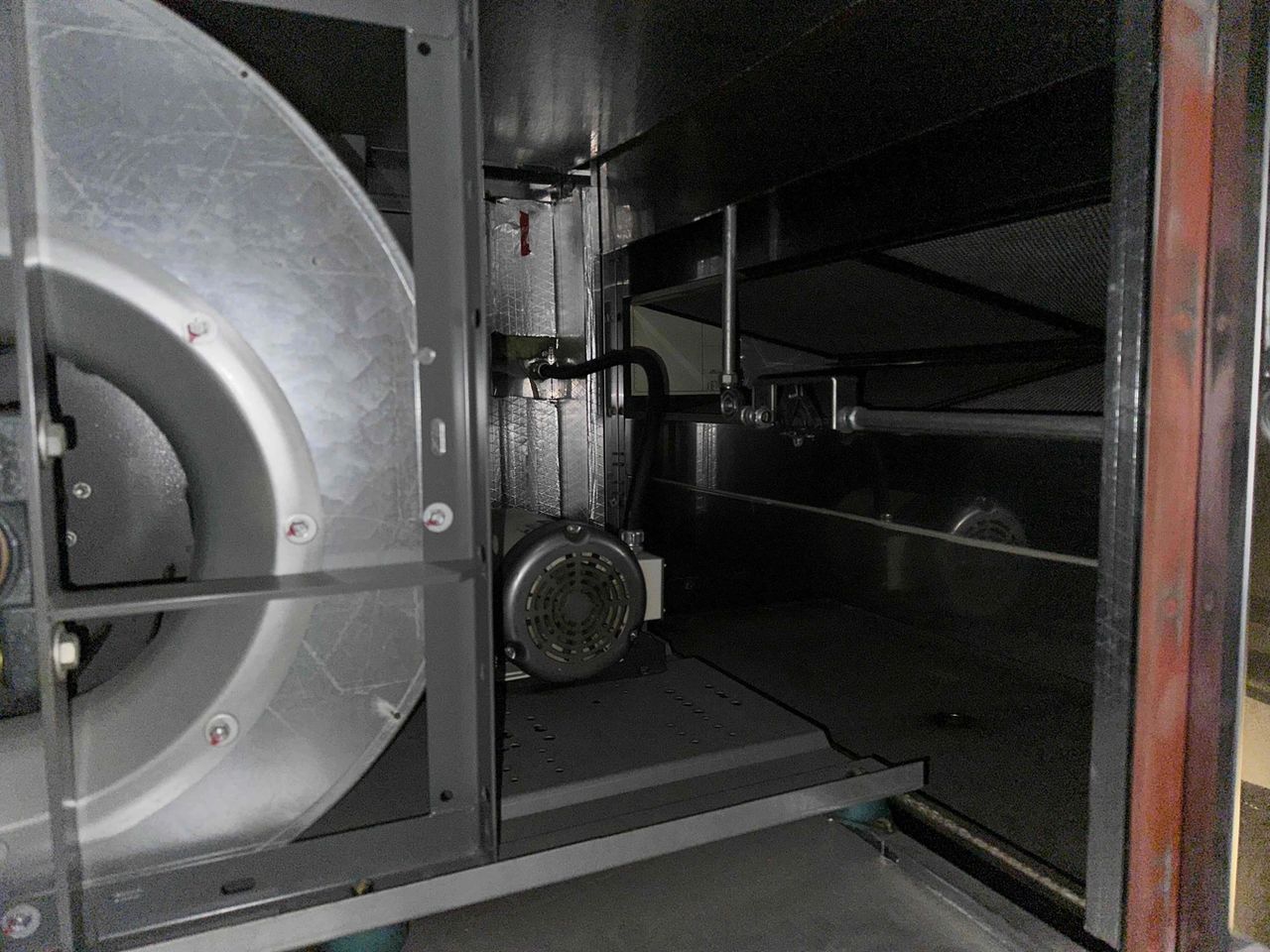
OUR SOLUTION
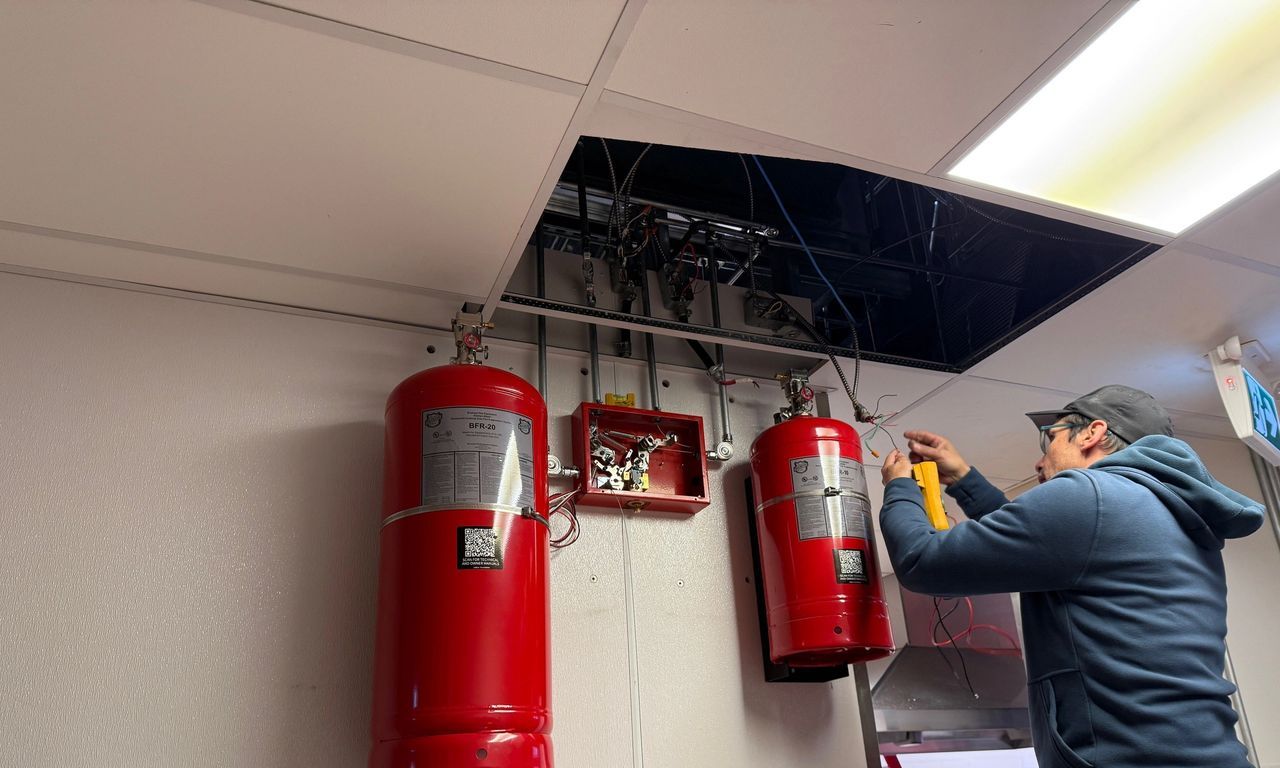
To save the owner time, we decided to replace both systems with a mechanical dual detection control head, dual cylinder: one for the ecology unit (big cylinder on the left) and one for the kitchen hood (smaller cylinder on the right). The control head can be tripped by either detection line or pull station. When system activates, both ecology and kitchen hood systems dump. Meeting NFPA 96 requirements for simultaneous activation when two hazards share the same ducting.
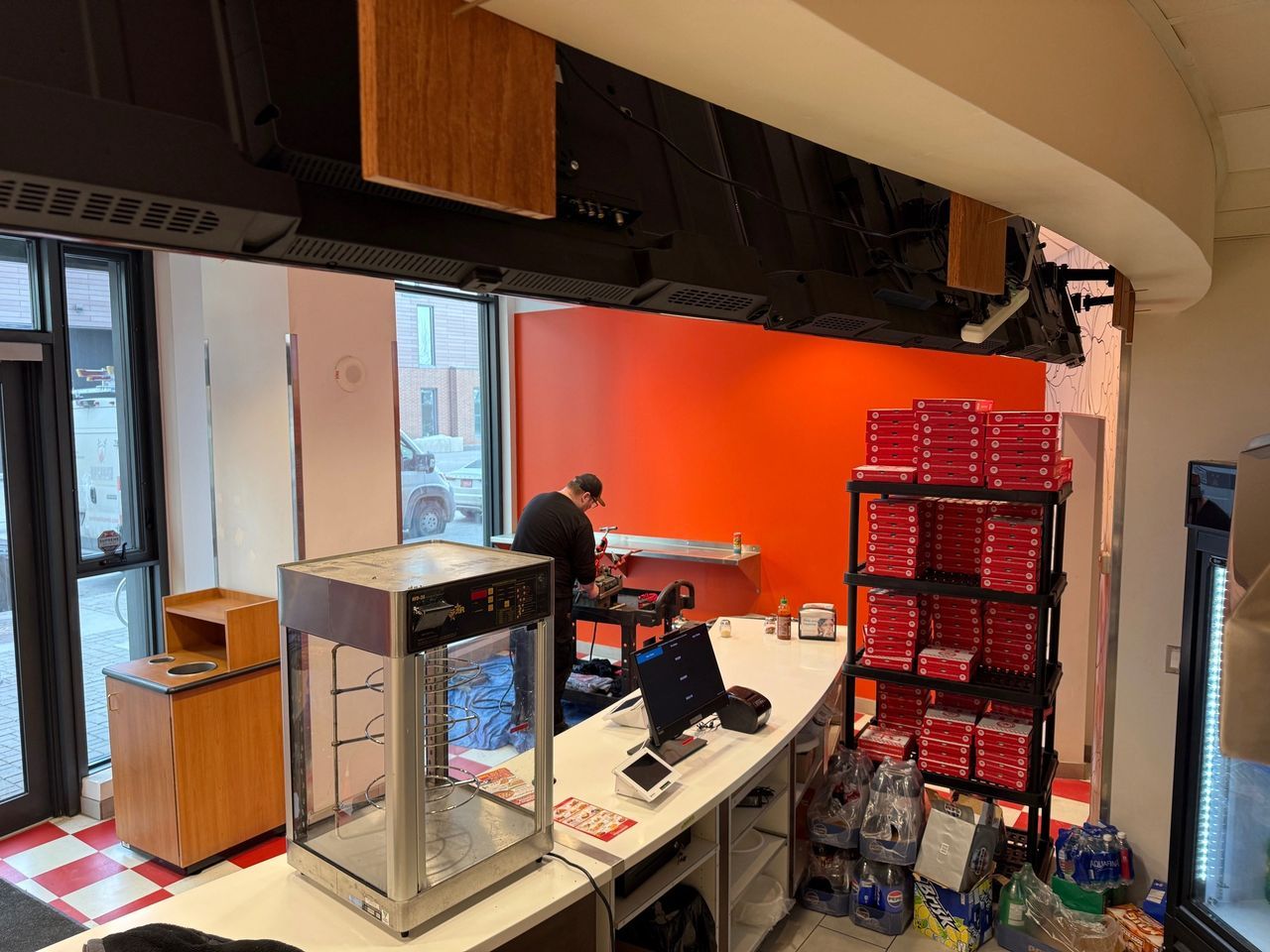
Cover photo: Our electrician subcontractor figuring out electrical wiring, to reconnect all required external system output connections.
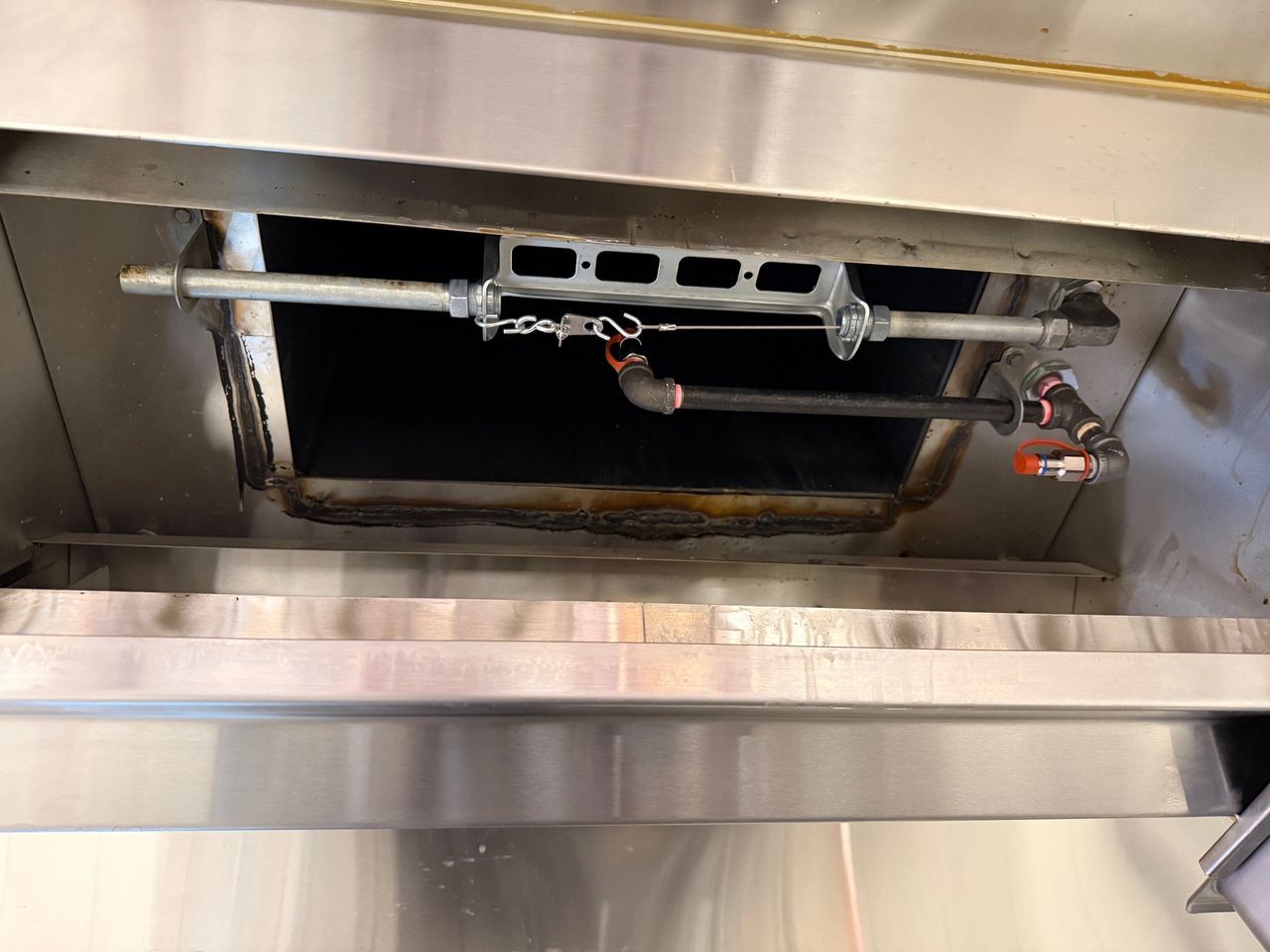
Anyways guys, I tried to be as detailed as I could with this, but I think from this post, you can gauge the seriousness of the situation. The system had a certified tag on there. The company that did this work, put everyone at risk, for the purpose of making a few quick bucks. We need to band together as an industry, and fight against this kind of behavior, and to call it out as soon as we see it! Very recently the fire at La Constellation Bar in Switzerland (around 40 dead, 150 injured) is the perfect example that fire protection is no joke! We're actually protecting people here! It's not a game!
Anyways if you made it this far, I appreciate you! If you wish to learn more about our company, or want to work with us, please contact me!
Thank you!
Martin Buffy, CRMO
Defense Fire Protection Inc.